March 23, 2022

BEHIND THE ZINES with Premee Mohamed, Assistant Editor at ESCAPE POD


Welcome to my second Behind the Zines interview! Every month I am interviewing people working behind the scenes (badumtsssh) at various speculative fiction publications. My goal is to highlight the work that goes into keeping these publications alive, and to share insights from the people doing that work.

Each monthly interview is available exclusively on my Patreon for one week, and is then posted here at Maria's Reading. (If you want to support my work, check out my Patreon or Ko-Fi.)

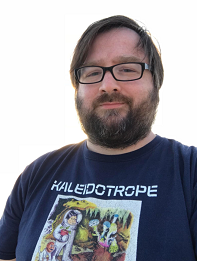
Last month, my guest was Fred Coppersmith, editor and publisher of Kaleidotrope (read the interview). This month's guest is accomplished author Premee Mohamed, who is also Assistant Editor at the science fiction podcast Escape Pod.

Since I did this interview earlier this year, Mohamed's novella And What Can We Offer You Tonight has become a Nebula Award Finalist! Also, three (3) of her books are on the Locus Recommended Reading List: her novel A Broken Darkness, as well as her her novellas And What Can We Offer You Tonight, and The Annual Migration of Clouds. 

Find all her books at https://www.premeemohamed.com/books 
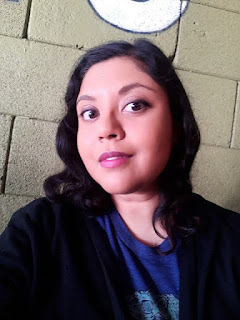

Q. First up, what’s your background: where did you grow up, and what do you do outside the world of speculative fiction? And: as a reader and writer, what drew you to that genre initially as a child or young adult or adult? Were there specific books or something else that sucked you into the world of SFF?

Premee Mohamed: I grew up in St. Albert, Alberta! This is a little barnacle that clings onto Edmonton, the probably-better-known capital city of Alberta. Outside the world of speculative fiction, I'm a public servant with the Government of Alberta! My work is related to environmental policy, focused on soil and land management. As a reader and writer, I've always loved speculative fiction -- my parents didn't care what I read and we didn't own many books of our own, so I was always in the St. Albert public library taking out armfuls of books when I was a kid. I particularly adored Monica Hughes, Susan Cooper, Barbara Hambly, Lloyd Alexander, Terry Pratchett, and William Gibson. My biggest formative influence though was probably the Young Wizards series by Diane Duane--I loved Kit and Nita and the entire magical system co-existing with the normal world, and the sense of wonder and awe I felt when I read them (especially Deep Magic, which as an ocean story absolutely fascinated me, a prairie kid). And I read William Gibson's Neuromancer when I was ten or eleven, and really began a sci-fi binge for the next couple of years trying to recapture the feeling it gave me. Which wasn't that easy, as our junior high and then eventually high school libraries did not have all that much fantasy and sci-fi. I also first read Mervyn Peake's Gormenghast books when I was around that age and became absolutely obsessed--I've read them probably fifteen or twenty times since.

Q. You became an assistant editor at the science fiction podcast Escape Pod relatively recently: how did that come about, and how would you describe what an assistant editor does? What does the job involve on a day-to-day basis?

PM: I was formerly a slusher at Escape Pod, but had to drop out due to time pressures, which I was pretty sad about--I liked slushing and being part of the crew, but I was just swamped. Then last fall, Divya and Mur (who edit Escape Pod) approached me to see if I could help out as an Assistant Editor, with the understanding that I was still pretty time-crunched but so was our other Assistant Editor, Ben, and maybe if we could split the firehose of stories in half, it would be more manageable for everyone? I was incredibly honoured to be asked, and I think the process is working pretty well so far.

I'm sure other venues have a similar process, but in terms of Escape Pod, the role of the Assistant Editor is to act as kind of a second set of eyes on the stories passed up by our first readers (Associate Editors). We're open almost year-round so there's always a steady trickle of stories coming in. The Associate Editors rank them and then Ben and I take a look at those and send back responses to the author and bump up stories to Mur and Divya to choose from. On a day-to-day basis, that's most of it; Ben also does some of the slush team management, like checking to make sure tags are correct or seeing if people are reading too many or too few stories. Sometimes we'll meet up to discuss stories that we would like a second opinion on, or stories where an R&R has been suggested and the story comes back to us, to compare the revised version to the original.

Q. Can you tell us a bit about Escape Pod, and what made you want to get involved behind the scenes there?

PM: Escape Pod is a long-running science fiction short story venue that's part of the Escape Artists family and has been operating since 2005! They pay pro rates for original fiction, so I had been submitting sci-fi stories to them for a while before they approached me out of the blue to see if I could help out their Associate Editor team a few years ago. I had never slushed before, but they were really enthusiastic and thorough about the training, and a little while after that they asked me to be one of the Social Media managers (so sometimes if you see the Pod posting about science stories or teasing the other podcasts, that's me!). They're just a really fun, passionate group of people who are consistently dedicated to finding and promoting SFFH, and to being good community members and offering opportunities for marginalized authors to be seen (for example, their recent Black Future Month, which was guest edited by the amazing Brent C. Lambert).

Q. What have you learned since you started your position, and what are the most enjoyable things vs. the hardest things about your work? Do you have any pet peeves?

PM: I feel like this is an interesting progression actually, because all the things I learned while slushing apply, but I also have to be thinking of other things too -- for one thing, because I read the Associate Editor comments before I read the story, I find it hard not to let the comments guide or influence my thinking about the story as I read. That makes it hard sometimes for me to reject a story that an Associate Editor really loved, but I still have to, because we don't pass up every story that gets passed up to us! I actually find rejection really hard in general, which surprised me. Much harder than receiving a rejection, because I'm like 'Well whatever' and just send my story out again. For the first little while I was reading the stories but Ben was sending out the rejections. It took me a long time to just be able to click the button! (It does get easier though.) I also try to give a little bit of feedback on stories that get passed up to us, but sometimes it's next to impossible. Saying 'This is a good story but we're not getting Escape Pod vibes' isn't helpful or actionable! I do really love finding a knockout story though -- the way you just know it when you read it and you sit there with your head filling up with fireworks and sparkles. Amazing feeling.

Q. What are some things you look for when you’re picking stories for Escape Pod? And if you could give any advice to the writers wanting to submit stories to the podcast, what would you say?

PM: We're definitely looking for stories that fit Escape Pod's existing vision and feel, and I think that's the first thing I look for! It's still something I'm developing my taste in (as well as reading the back catalogue whenever I get a chance!). It's not that we never publish stories that are super gory, grim, bleak, or feature a lot of violence or torture or murder; it's just those are kind of a hard sell for Mur and Divya, and if I see it, it has to be really impressive in a lot of other aspects for me to pass it up. For myself too, I'm looking for a strong hook -- for the first paragraph (or ideally the first sentence!) to show me what the rest of the story will be like: the tone, the atmosphere, the premise if possible, and that it's a sci-fi story. I also look for a strong, logical ending that connects back to the start in some way; and I like for the emotional story to make just as much sense as the story being told in the actions of the characters. Consistent character decisions and motive is great: it's always a bit of a turn-off when a character does something for plot reasons, because it feels clunky and awkward. I don't like seeing characters do things that they're being 'told' to do by the author, rather than because they're making a choice. Ben and I particularly like to see character agency in the sense of them being presented with decisions and choices that influence the events of the story -- it doesn't have to be all pew-pew spaceship-blowy-uppy brain-implant-disaster action whatever all the time, but we like to see active characters that participate fully in the story! I also like to see fresh, precise sensory descriptions ("Her hair was the colour of gold and her eyes were as blue as the ocean" is going to be a hard sell). In audio, strong sense imagery is awesome for the listener even more so than for the reader; it helps keep people grounded and interested. I guess in terms of advice to submitting writers, for sure read or listen to Escape Pod's stories (they're all free and they're all on the website!) to get a sense of what we're looking for; but also make sure your characters are active, your prose is audio-friendly, and your sci-fi premise is an integral part of your story and doesn't show up on page 11 of 15!

Q. You’re also a writer, how do you feel like the work as an assistant editor has influenced your own writing, if at all?

PM: By a mildly hilarious coincidence, for the entire time that I've been an Assistant Editor I've been writing a fantasy novel, of all things. But I do think the experience has influenced some of the ways I think about my own writing! Particularly in terms of repeated category mistakes. When I read Ben's comments, or an Associate Editor's comments, on a story, I often think "Oops, I've done that" or "Oops, I have a whole story planned with that exact problem." They're very perceptive but also, when writers do the same thing again and again, it starts to jump out as a recognizable pattern. I've been consciously trying to avoid those patterns in my own writing. A lot of them aren't related to the prose itself but to the structure of the story -- starting too early, finishing too late, creating plot armour, plot holes, having disproportionate amounts of dialogue, exposition, or action for the length of the story, that kind of thing. I'm much more aware of structure now because I've seen so many interesting examples of it, and I hope I'm getting more of a feel for when something works and something doesn't both in the submitted stories and in my own writing. It's good to experiment! I love experiments! But sometimes it just can't hold up.

Q. Has being involved behind the scenes affected your view of the SFF community and the business of genre fiction publishing? Have you gained insights you didn’t previously have as a writer and listener/reader?

PM: I don't think so... there's probably something I'm forgetting though. I think it really drove home though that when an editor writes back to you to say, 'This story was great but we're not buying it,' that literally is all it means. The story is genuinely great, and Ben and I agonize over great stories all the time, because we really can only pass up so many a month. Sometimes it means 'great for another venue that doesn't object to the genocide in the first page, and someone else will snap this up immediately.' It's not personal at all. It's because there's only so much money every month for four stories, so it's not just the story itself being taken into consideration, it's also wordcount, reprint status, similarity to existing stories, and other things that Mur and Divya take into consideration.

Q. For those writers and readers out there who might be thinking about getting involved with a podcast or zine, in any capacity, what would you say to them? Any tips and / or advice?

PM: Being a first reader is a terrific experience, and if you let people know that you're available to do it and willing to learn, hopefully they reach out! The sheer volume and breadth of stories is a fantastic crash education in what's out there, whether it impacts your own writing or not. I really recommend people get involved if possible, even if it's just on a volunteer basis. And for readers, particularly for Escape Pod, we're super grateful for our Patreon supporters. The Patreon makes it possible to pay writers, narrators, and Associate Editors, and to provide all the stories for free! The podcast wouldn't exist without its readers. I would also gently encourage readers to rate and review, and to get involved in the forums and the Patreon Discord if they feel like it; there's a lively community there and it's another way to support the authors for free! Just looking at it from both sides I know it's hard for someone to publish a story and feel like it's gone into the void because there's no discussion about it.

Q. Finally, some writerly questions. You had several (excellent) works published last year. Three novellas: These Lifeless Things, The Annual Migration of Clouds, and And What Can We Offer You Tonight. PLUS! your second novel A Broken Darkness(sequel to Beneath the Rising). What’s coming up from you this year on the writing front?

PM: Aw thank you! Yes 2021 was a busy year... this year, the third book in the Beneath the Rising trilogy, which is The Void Ascendant, is coming out in April! Very excited to see that story concluded as it's been part of my life for so long. My next story out will be “With All Souls Still Aboard”, which will be coming out in the Reinvented Heart anthology in May, edited by Cat Rambo and Jennifer Brozek. And after that we'll see! There may be other things in the works. ;)

[SPOILER ALERT! There were indeed other things in the works: a short story collection! The announcement came last week: Undertow Publications will be publishing Premee Mohamed's debut collection of cosmic folk horrors and genealogical tragedies No One Will Come Back for Us next year!]

๐Ÿช

Check out Escape Pod!

Premee Mohamed's website / Twitter 

Again, huge thanks to Premee for this interview! ❤


March 13, 2022

My Sci-Fi, Fantasy & Horror Short Fiction Roundup for February 2022

The artwork for this roundup is a detail of Caroline Jamhour's "Germination", from the cover of Luna Station Quarterly #49. More about the artist: https://www.artstation.com/carolinejamhour

An audio version of this roundup is available on YouTube:


The first five stories in this roundup are taken from an excellent post by Alex Shvartsman at Future Science Fiction Digest: "A List Of Ukrainian-Born Sf/F Authors Whose Fiction Is Available In English". It includes short fiction and novels. Some of these stories are from several years ago, and some are quite new. They are all excellent reads.

Things We Leave Behind by Alex Shvartsman in Daily SF

Some of my earliest memories are of books. They were everywhere in our apartment back in the Soviet Union; shelves stacked as high as the ceiling in the corridor and the living room, piles of them encroaching upon every nook and available surface like some benign infestation.

Shvartsman describes this as a "semi-autobiographical story about emigrating from Ukraine to the USA". It is quiet and wistful, resonating with hints of magic that may or may not be real, and explores the thorny, painful issues within a family caught up in a changing world as the Soviet Union comes to an end. The pain of leaving a place, and the excitement of coming to a new country, and the way each family member is affected in a different way comes through clearly and sharply.

Seven Losses of Na Re by R.B. Lemberg in Daily SF

My life is described by the music of mute violins. When my parents married, my great-grandfather, may the earth be as a feather, ascended the special-guests podium, cradling the old fiddle to his chest. "And now the zeide will play the wedding melody," they said. "A special blessing," they said, a sgule, a royal blessing. But the bow fell from his fingers.

I love Lemberg's work but had never read this story by them from 2012. It is beautiful, threaded through with grief and pain, but also so much love and memory. There's a world that was lost, people who were lost, and there are words and names and languages that can no longer be spoken. Breathtaking prose, and a gorgeously, painfully wrought story about some of the darkest pages in European and Soviet history.

The Emperor Of Death By Marina And Sergey Dyachenko, Translated By Julia Meitov Hersey in Future Science Fiction Digest

“The emotional base of your account appears to be off. You seem tense when you describe the boy.”

“I can explain. Dennis was born on his due date; delivery was easy, without complications. He developed normally. His first words were ‘mama’ and ‘pilot.’ When he was eight years old, the captain died. A month later the biologist, his father, passed away as well.”

A chilling, compelling science fiction story that twists slowly, inexorably into quiet, almost unspoken horror towards the end. Dennis was born on a long-distance space expedition. One by one everyone else on the expedition died under mysterious circumstances. Eventually, the orphaned boy came back to Earth, but death still haunts him, and now three of Dennis's teachers have all died. Alexander has been sent to investigate what has happened, and ends up finding out more than he bargained for.

Kulturkampf by Anatoly Belilovsky at Cast of Wonders (narrated by Hans Fenstermacher)

The French did put up some feeble resistance; approaching Sedan, I became aware of an odd syncopated rhythm off in the distance. Upon opening the window I was able to ascertain the nature of the music.

“Toreador!” I exclaimed. “The fools! They think to defeat me with Bizet!”

I absolutely LOVE this totally bonkers steam-punk / alt-history story where music is used as a weapon of war, and where some major big European conflicts are played out by instruments and orchestras. The audio version is priceless btw, and a real treat for the soul.

Animals of Ure by Daryna Stremetska in Three Crows Magazine (translated by Maksym Bakalov)

The long beep of the space suit sensor indicated that the air was suitable for breathing, and he pulled off his helmet. His lungs filled with the humid air of Ure. For a moment, Ariel felt sorry for the two carybaras who had to leave this beautiful planet and spend the rest of their lives on the desert-like Kare. But such was His Majesty’s will.

Ariel and Greg have been sent to the planet of Ure by His Majesty Ludwig CVIII, tasked with bringing back to carybaras, animals that the king wants to put in a zoo. Ariel isn't totally comfortable with this task, but disobedience is unthinkable, so he and Greg set off to complete their work as quickly as possible. Things take a turn as soon as they meet one of the carybaras, a creature that turns out to be a lot different than Ariel expected. I love the way this story quietly twists in the telling, and the ending is very satisfying.

๐Ÿ•ฎ

I also want to boost the work of SFF writer Karolina Fedyk. They are part of a Polish volunteer organization called Letjaha (Flying Squirrel), working to transport Ukrainian refugees from the Polish/Ukrainian border to Krakรณw. Find it on Twitter and donate here.

Your Inheritance Will Taste of Salt by Karolina Fedyk in Fireside Fiction

The air is curdling with a storm, hot and molasses-thick, when the fisherman and the witch study each other. They lock their wet hands together, interlaced fingers anchoring them against a different kind of tide.

This is a different kind of selkie story, and a different kind of witch story. Fedyk's tale takes the elements of fairytale and folklore and weave something new from the threads. There's a fierceness and sharpness to the characters here, and their relationships, that makes this story special.

๐Ÿ•ฎ

Small Offerings For a Small God by Virginia Mohlere in Luna Station Quarterly

A devastating, quietly powerful story about a very small godling and a warrior that has been cursed to walk back and forth across a desert in her armour until she dies. What happens between these two characters when they meet changes them both. In her quietly exquisite prose, Mohlere captures so much in what is both said and left unsaid, exploring the complexities of guilt and pain, arrogance and redemption, and the nature of both grace and evil. There is a great interview with Mohlere at the LSQ blog: https://lunastationquarterly.com/issue-049-author-interview-virginia-mohlere-and-small-offerings-for-a-small-god/

๐Ÿ•ฎ

My Cloak of Keys by Fran Wilde in The Deadlands

Most of the newly dead don’t know what they want anymore, and that’s a good thing. But some sure as hell do.

I’m still sore from the soul that yesterday wrapped itself around one last need like a fist. Most souls appear to me like milkweed wisps and bits of packing twine. My friend at the river claims they look like worn socks to him, even the fighty ones. But this one? A stubborn bramble. I nearly broke it in half, getting that want out.

In a desolate place where the dead end up after they pass away, someone gathers the needs and wants those dead still cling to, and carries them in the form of keys. Sometimes, the carrier of the keys catches glimpses of the world of the living, of what it is the dead so desperately cling to, and sometimes they slip back into the world of the living to finish the tasks the dead could not. But crossing from the land of the dead back into the world of the living is both difficult and dangerous, and when someone sets a trap... the holder of the keys walks into it. Wilde's story is both fierce and heartbreaking and I love the mixture of beauty and brutality; I love the vividly imagined land of the dead, and I love how the needs and wants of past lives echo throughout this tale.

๐Ÿ•ฎ

Three Songs to Fill Up the Shadow by Spencer Ellsworth in Beneath Ceaseless Skies

It was shadows-eve, the coldest, longest night of the year, when the blackbird breathes all over the world. He’d made two trips across that day, in in a current so wide and misted that the sharpest-eyed steamboat pilot couldn’t read it, each pole-stroke like stirring Death’s dinner. Now at last, the ferryman jammed his hat down low on his head, his thoughts on a corn-cake, hot buttermilk and a fire.

This riveting and finely crafted novelette is structured as several tales told within the main tale, and all of them (in one way or another) concern Death, a golden fiddle, and the woman who stole and played that fiddle. Ellsworth's prose is an absolute delight, and the language gives this tale such texture and depth, building the world from the words and voices of the passengers on a ferry. They are all crossing the water for a purpose that only becomes clear to us as they each tell their stories. 

Bonsai Starships by Yoon Ha Lee in Beneath Ceaseless Skies

At the center of every starship was a bonsai starship. It rested in the starship’s command garden and provided the magic that propelled it.

Novice Kei had known this longer than she had known her own name, especially since she was the eighth Kei who currently served at the Shrine of Budding Nights on the world known as Coronet. All the novices were named Kei or Asahi or Kaoru until they passed the initiation or left the shrine for destinies of their own. Kei-the-Eighth accepted the wisdom of this the way she accepted the shrine’s traditions—all but one.

Any story by Yoon Ha Lee is a must-read as far as I'm concerned, and this one is a perfect weave of fantasy and science fiction (which makes sense, since it's from the Science-Fantasy issue of BCS). Here we meet novice Kei who serves at the shrine where bonsai starships are grown, and who must make a terrible choice when she finds out what will happen to the growing bonsais in her care. I love how each growing bonsai starship has its own will and personality, and I love how Kei's love for the "plants" in her care is what drives her to make some radical decisions. 

Blood Grains Scream in Memories by Jason Sanford in Beneath Ceaseless Skies

Chakatie followed a simple truth: when the whole world wants to kill you, live as if you’re too joyful to die. So even as she prepared for battle, she smiled at the thought of wearing a neon-blue three-piece suit and matching bowler hat as she fought for her life.

I fell in love with Jason Sanford's Blood Grains world in his first story set in this story-verse: Blood Grains Speak Through Memories from 2016. The Blood Grains world was once, far in the distant past, ravaged by humans until the existence of all life was threatened. A solution was found, but it completely changed the world: radical nano-technology was used to turn some people into "anchors" that would care for, and viciously defend, certain areas while assisted and essentially ruled by the "blood grains". It's a fascinating world, populated by strange and fascinating characters, and "Blood Grains Scream In Memories" is the final part of what is essentially a mosaic novel. The two other stories that complete the series are: The Emotionless, in Love and Where the World Ends Without Us. Highly recommended reading!

๐Ÿ•ฎ

The Third Feather by Fatima Taqvi in Tasavvur

Here is Jiji, hardly visible under the night sky. Making sure she is by herself. 

The twin citadels of Amerkot Fort loom down at her. She is right in their shadow, her back against the ochre brick wall of the kitchens. Even the starlight fails to reach her as it falls on the sands of Thar. Nobody besides her, she thinks, would be out at this time that belongs to the white-footed desert foxes and the slithering Lundi snakes.

Wow. This is an exquisitely wrought tale about Jiji, who as a child found a baby bird (or was it really a bird?) and helped it escape from a viper. As thanks, the mother bird gave Jiji three of its feathers, and whenever she burns one of those feathers, a wish is granted. Two of the feathers help bring fortune and favour at the royal court to Jiji and her husband, but one feather still remains. There is palace intrigue, magic and ambition, motherhood, love, and dreams here, and Taqvi masterfully spins all these threads into a mesmerizing story. Jiji's life changes each time a feather is burned, as the magic twists her life in a new direction, but in the end, she finds a different path altogether.

๐Ÿ•ฎ

Oversharing by R. J. Theodore in Fireside Fiction

The day after I lose my job, it begins as a crust in the corner of my eye. It leaves a scratch as I brush it away.

A tiny, brilliant slice of body horror flash. The transformation leads to hunger, cellphone problems, and then, pursuit of a desire. Dark, twisted, and glorious.

๐Ÿ•ฎ

Telling the Bees by Kat Howard in The Sunday Morning Transport

My lover is dead and my honey is bitter.

The latter of these, certainly, is my fault.

I should have told the bees of . . . I should have told the bees. Or maybe I should have better listened.

I should have done any number of things.

I did not.

A woman has become a witch, living in the woods, growing flowers for the bees that make her honey. She speaks to the bees, and in turn, the bees speak to her. The honey is sweet, the bees love her, until a man enters her life. Even though she's helped others get away from bad men, bad relationships, it takes her too long to understand what he is doing to her, to the bees, and to others. Howard's story is beguiling and beautiful, and it incorporates all sorts of lore and magic concerning bees. I especially love the way the witch eventually crafts her revenge in a truly appropriate manner.

๐Ÿ•ฎ

Delivery For 3C at Song View by Marie Croke in Diabolical Plots

Sometimes, and I’m stressing the sometimes, wishes muttered within my hearing come true. I’ve invested in a good set of earbuds, noise-cancelling headphones, and have an over-spilling jar of earplugs, yet accidents still happen.

Dana Utepi works as a Dasher, delivering food to people all over the city. She is also a descendent of a djinn, which ends up causing her both minor and major headaches when people speak their wishes in her vicinity. Croke spins that setup into a most delicious and enjoyable reluctant-meet-awkward romance (of sorts) that has more than one twist along the way.

๐Ÿ•ฎ

Human Body as Compendium by Mary Berman in PseudoPod Flash on the Borderlands LX: Words Like Violence (narrated by Suna Dasi)

A flash fiction story that is part of an excellent Flash on the Borderlands episode at PseudoPod. In this one, visceral body horror fills every sentence and paragraph, but the real horror is the emotional reality behind the what is happening. Berman’s story is deeply unsettling and disturbing and sharp as a knife’s edge.

To quote the writer: “In moments of high anxiety I like to imagine that I can crack my skull open and take my brain out and put it somewhere else for a while. “Human Body as Compendium” carries this impulse to its natural conclusion.”

Never Enough Pockets by Kat Day in PseudoPod Flash on the Borderlands LX: Words Like Violence (narrated by Katherine Inskip)

This story is such a glorious and feral tale of rage, and of how to turn anger into power and action, and righteous vengeance. I love the vivid imagery of the making of the pockets, and I must say, I wouldn't mind a few of those pockets myself.

“Never Enough Pockets”: inspired by both what happened to Sarah Everard and the shocking conduct of the police during the subsequent vigil on 13th March 2021, see here for some info.

๐Ÿ•ฎ

Eight Arms To Hold You by Angela Teagardner in Cast of Wonders (narrated by Barry Deutsch)

Other than an ugly plastic treasure chest and a forest of aquarium plants, he hadn’t even been given a place to hide. He’d spent weeks in that chest, pretending to be overcome by shyness. It was part of the plan, a way to lull Dr. Lab-coat into a false sense of security once he got out.

An absolutely delightful and compelling tale about Oscar who is a very clever octopus, clever enough to outsmart Dr. Lab-coat, as he sets in motion Operation Puddle Jump in a quest for freedom (and romance). I love everything about this story, from its sly humour, to its madcap escape plans, to the way a coffee maker plays a pivotal role.

๐Ÿ•ฎ

Babang Luksa by Nicasio Andres Reed in Reckoning

Salt had crept in while he was away, and now the freshwater wetlands of Gino’s childhood are a marsh, brackish and fickle. There is the soccer field where he’d stained his knees; it had been a low, dry rise of earth bracketed by mud and cordgrass, and today is impassable, a thicket of cattails in algae-skinned water, a humming choir of insects. And here the Jiffy Lube where Gino got his first job, and the stand of trees outside it where Gino smoked his first cigarettes.

Babang Luksa is a Filipino funeral custom that takes place on the first anniversary of a death, and in this story, this custom brings Gino back home to his family a year after the death of his father. Reed tells a quietly powerful story about family and grief and regret, all set in a not-too-distant future where the waters are rising everywhere, changing and submerging the world as they rise. I love the prose here, the subtle ways Reed captures both the intricacies and conflicted emotions of complicated family relationships, and the various ways the changing climate impacts not just "the world" but life on a personal, neighbourhood level.

๐Ÿ•ฎ

Full Worm Moon by Paul Lorello in The Magazine of Fantasy & Science Fiction Jan/Feb 2022

An unsettling tale of a strange clan of creatures living at the edge of our regular world, haunting the cemeteries on certain nights to consume the worms that come out of the graves. What happens to them after eating the worms is a deep, dark kind of magic that makes them assimilate some of the memories and knowledge of the dead. For one of them, his first time in the graveyard upends his whole life and shatters his identity, causing him to leave his world and family behind. It's is a harrowing and devastating tale of someone at the edge between adolescence and adulthood, humanity and monstrosity, loneliness and belonging, and the search for a life he wants to live.

Proximity Games by M L Clark in The Magazine of Fantasy & Science Fiction Jan/Feb 2022

Another fantastic story from this issue of F&SF. Clark tells a complex and compelling story of humans and aliens, of humans leaving Earth and the conflicted choices they must make in the process, and the new challenges and conflicts, internal and external, that await them on their new home planet. I love the way a scene from the beginning with a feral cat echoes through the story, and I love how Clark explores the many complexities of relationships in families and societies, and how we approach new forms of life and new ways of living.

๐Ÿ•ฎ

Stone Ghosts and Your Punishment Is by Die Booth in Making Friends (and Other Fictions)

I've just finished reading this excellent collection of excellently strange short stories by Die Booth, and I recommend the whole book, but these are two of my favourites.

"Stone Ghosts" is a love story and a mystery and a noir-edged coming of age story, all told in the space of a short story. Booth captures adolescent love, rebellion, family tension, and the feeling of being trapped in a place that won't allow you to be yourself, whoever that may be. "You can fall into stride with this city, but you can't outrun it. You can't tame it, or befriend it. It's looking for ways it can use you to live."

"Your Punishment Is" is a harrowing and bloody tale of a man captured in the act of killing someone. However, when his captors decide to hang him on the spot, things take a very strange turn, and I love how Booth twists the tale at the end. As in all the stories, Booth weaves a gripping tale that hooks you from the first sentence to the last.

๐Ÿ•ฎ

The Last Truth by AnaMaria Curtis at TOR.com

This story was the first place winner of the LeVar Burton Reads writing contest, co-presented by FIYAH Literary Magazine and Tor.com, and it is a fantastic tale of memory and identity, and desperation:

A runaway and indentured thief, Eri must provide a new secret to open each new lock, at the cost of her own memory. Hundreds of locks later, Eri can barely recall her own past. An unanticipated alliance with a musician may prove the key to both their freedoms—if Eri doesn’t lose herself in the process.

Eri cracks open truth-locks, magical locks that require a truth you've never told anyone else in order to open. And since each truth told is consumed in the process and disappears from her memory, she is losing her past and herself bit by bit. When she meets Anea, a musician, there's a glimmer of both love and hope for both of them, but to gain her own freedom and find the lost instrument Anea is looking for, Eri must risk everything she has and everything she is. This story kept me on the edge of my seat, and I love its mixture of bitter desperation and hopeful warmth. 

๐Ÿ•ฎ

Annunciation by P. Akasaka in Strange Horizons

The Archangel told me I was chosen, expecting. I thought a little and answered: I couldn’t give my consent. The power balance was such I could not ascertain whether there was an element of coercion involved.

“That sort of thing is really bad news for a relationship,” I told them. “I know better than that now.”

A woman is told by an archangel that she will become pregnant, but not with a child but a language. Akasaka’s surreal story is brilliantly sharp and darkly funny, with an edge that cuts deep as it explores the intricacies in the usage and creation and loss of languages, weaving in both pain and resistance and a measure of body horror in the process.

February 22, 2022

BEHIND THE ZINES with Fred Coppersmith, editor and publisher of KALEIDOTROPE


Welcome to my very first Behind the Zines interview! This is a new monthly feature where I will be  interviewing people working behind the scenes (see what I did there?) at various speculative fiction publications. My goal is to highlight the work that goes into keeping these publications alive, and to share some insights from the people doing that work in order to bring us so much excellent fiction.

Each monthly interview is available exclusively on my Patreon for one week, and will then be posted here at Maria's Reading. (If you want to support my work, check out my Patreon or Ko-Fi.)

My very first guest for this interview series is the amazing Fred Coppersmith, editor and publisher of Kaleidotrope.

(Artwork by Cindy Fan for the latest issue of Kaleidotrope.)

Kaleidotrope has been around as a publication since 2006, and 

“publishes predominantly speculative fiction and poetry—science fiction, fantasy, and horror, but also compelling work that blurs the lines between these and falls outside of neat genre categories.”

As mentioned, Fred Coppersmith is Kaleidotrope’s editor and publisher, and I was very happy that he agreed to an interview. You can find Fred on Twitter at @unrealfred.

Q. What’s your background, and how did you end up starting a speculative fiction zine? Also: where did the name Kaleidotrope come from?

Fred Coppersmith: I wish there were more exciting answers to “how’d I end up starting Kaleidotrope?” and “where’d that weird name for it come from?” than “I just kinda did,” and “sorry, I don’t remember.” But that’s the honest truth.

I’d wanted to start a zine for the longest time, and in the early 2000s, there were a lot of really neat and interesting ones popping up in the speculative fiction field. Zines like Electric Velocipede, Flytrap, Full Unit Hookup, and Lady Churchill's Rosebud Wristlet. I remember LCRW in particular really encouraging other people to go out and embrace the DIY zine-making approach. And, after a false start or two, that’s what I did.

As it happens, “the Kaleidotrope” was a mechanical magic lantern very briefly marketed in the late 19th century. But I honestly can't remember if I knew that ahead of time or only well after the fact. It’s certainly not why I named the zine that. All I know is, in 2006, it sounded like a fun made-up word and nobody else had taken it.

As for me, I was born and raised in New York, on Long Island, which is where I’ve lived most of my life, and where I am now. I work as a development editor in academic publishing. I don’t know if that informs the editorial work I do in speculative fiction, but they’re not as far removed as you might think.

Q. What drew you to speculative fiction? Any particular shows or books or movies that attracted you?

FC: Oh, too many to name! Kaleidotrope actually didn’t start out as an exclusively speculative fiction magazine, but that’s always where my interests have been. That’s always the shape the zine was destined to take. I can’t remember a time when I wasn’t actively interested in science fiction, fantasy, and horror. And, frankly, it’s in genre where I think the most interesting and exciting short fiction is being published nowadays. It’s also where you’ll find a much more engaged readership.

Q. You are the editor and publisher of Kaleidotrope. That sounds like two very big jobs! How would you describe what your work entails? And what are the best things and the hardest things about being editor and publisher? What are the major challenges, whether financial or creative?

FC: I think they’re both part and parcel of the same thing, at least in the way I run Kaleidotrope, so maybe it’s just one very, very big job. Chief cook and bottle washer, as it were.

It’s a one-man operation, so I’m not making publishing decisions separate from my editorial decisions, or vice versa. I’m just trying to find great writing that connects with me, then trying to connect it with other people. That’s a lot of fun, and it’s what keeps me engaged after all these years, but it’s also sometimes difficult finding the time and resources for it. It means reading a lot of work that doesn’t connect, sending hundreds of rejection letters, spending a lot of my own money, and occasionally seeing stories I thought were amazing fail to get the kind of response I was hoping for.

Q. As a reader who loved speculative short fiction, it seems to me that every zine has its own personality. How would you describe what Kaleidotrope is all about or what you would like people to associate it with? What’s your sales pitch to someone who hasn’t read the zine before?

FC: Well, a very early review of the zine did say that you’d enjoy it “if you dig Martians, robots and people with melting heads…” :)

I agree that every zine has its own personality, but sixteen years in, I may have even less of a handle on what Kaleidotrope’s is than when I started. Certainly, my own peculiar tastes and sense of humor help shape the zine, but I think what I respond to more than anything else is variety. A mix of genres and styles, tones, and perspectives. Kaleidotropewould certainly be more marketable if I had a simple elevator pitch—if I could point to something and say, “there, that’s a Kaleidotropestory!” But I like that you’re going to continually find something new and unexpected in its pages, because I’m continually finding something new and unexpected in them.

Q. Could you pick three stories from past issues that in your opinion captures what you look for in stories for your zine and represents the kind of tales you want to publish?

FC: Oh, that is an incredibly difficult question—and right after I got done saying I couldn’t point to anything as a distinctly Kaleidotropean story! One of the main things I’m looking for in a new story is something I haven’t seen before.

However, a quick glance at the very first stories in the Winter 2022 issue does suggest I’m maybe more interested in characters and voice than strictly plot—less in what happens than in who it happens to, and how it’s told. For instance, Scott Edelman’s “And, Behold, It Was Very Good” is on the surface pretty standard Garden of Eden story, but Scott’s cleverness and humor made it something really special for me. Likewise, I was truly unsettled by Richard E. Gropp’s “The Skin Inside,” even if it’s not always clear how or why those unsettling things are happening.

Themes often emerge in the types of stories I accept, but they just as often take me by complete surprise.

Q. When you open for submissions, how many subs do you usually receive? Do you have slush readers or do you read them all? What’s that process like?

FC: I don’t have slush readers, so it’s all me, reading everything. That means getting through a lot of submissions in an increasingly short timeframe. It’s a little hard to gauge since I was closed to submissions entirely for almost two whole years and only just re-opened in 2021. However, the number that I get has definitely increased since I started in 2006.

Last year, I was open to submissions a month at a time four times throughout the year, and I received easily over 600 stories and a couple hundred poems in each and every reading period. I obviously couldn’t publish all of that, even if I wanted to, so every day there’s a lot of reading and a lot of rejection letters. And I was replying to most submissions in just a few days. So it’s maybe less of a process than a mad scramble.

Q. If you could give advice to the writers wanting to submit stories to your zine, what would you say?

FC: You mean besides “read the guidelines” or “read the zine”? I think it’s important to try and know the markets you’re submitting to, but also to be as well read in the field as you can. If you’re submitting stories, you should be reading stories. I also think it’s good experience for a writer to work, even briefly, as a slush reader. It helps you better understand how editors work within their guidelines, why even good stories often don’t quite fit, and how you can better diagnose common mistakes you might otherwise make yourself. It’s a good perspective to have, even if you don’t plan on editing or publishing a zine yourself.

Q. If you could go back in time and talk to yourself when you got into the business of running a zine, what insights and tips would you share with your younger self?

FC: If I could go back in time, I think I’d do something more productive, like ride a dinosaur or something. I worry that if I told my younger self how difficult working on Kaleidotrope would sometimes be, I’d dissuade him from ever starting it. And then I’d miss out on all the parts that aren’t difficult or are a joy despite that difficulty.

Q. In your opinion, how has the business of publishing Kaleidotrope changed since you started out? I know your zine was available in print for a while but that is no longer the case: tell us a bit about that evolution. And what trends and changes have you seen in your business and what would you like to see more of? Less of?

FC: Kaleidotrope was an exclusively print zine for its first six years, during which I put out thirteen issues, usually twice a year. It was a lot of work, a lot of money and hours spent at the copy shop and post office, and I had very few subscribers. I’m proud of those issues and the work that I published, and they received some really good notice, but there was also a lot of aggravation. Moving online allowed me to focus more on the parts of Kaleidotrope that I enjoy, made it possible to share the zine with more readers, and offered an opportunity to pay writers a little more. It just felt like the right decision, and while there are some aesthetic things I miss about print, in the ten years since I’ve never looked back.

Are there wider trends that I’m aware of, though? I mean, plus รงa change, right? I’ve seen a fair number of magazines come and go. I think there’s more diversity than when I started, which is great, and that’s starting to be reflected more in the voices working behind the scenes, which is even better. But I don’t know that there are trends I’d like to see less of. A story that doesn’t work for me could very easily end up being some other editor’s favorite, and that’s exactly as it should be.

Q. What is something about your job behind the scenes that you think most people DON’T know but that is a major part of it when you’re active behind the scenes?

FC: Maybe that editors won’t necessarily read a short story submission all the way through before making a decision—so hooking them right away is even more important. A lot of that’s just the numbers game, when you’re receiving so many submissions and need to respond so quickly, but I also know if a story hasn’t grabbed me a few pages in, it’s even less likely to grab the average Kaleidotrope reader.

Q. I know there are a lot of challenges for publications like Kaleidotrope. I’ve seen zines come and go over the last few years, and I know there are a lot of financial challenges, and I think there’s also a fair bit of burnout happening for people behind the scenes of most zines. What keeps you going?

FC: Foolishness and caffeine? Honestly, I really do enjoy doing this, but it’s a very expensive and time-consuming hobby. I have the freedom to treat it as such, but I could easily not have that, and I don’t blame anyone for burning out or closing up shop.

Q. You are also a writer, do you feel that your writing and your publishing work influence each other, or do they feel like separate endeavours?

FC: Working on Kaleidotrope often gives me less time for writing…or maybe just an excuse to find less time, when I’m in the mood to do anything else but write, which is too often. I’d like to think that reading literally thousands of stories over the years, and trying to figure out why they do or don’t work, has made me a better writer. They’re separate endeavors, but two sides of the same coin.

Q. What’s up next for Kaleidotrope? When’s your next issue? What are you excited about? Or would you like to share some writerly news?

FC: Kaleidotrope comes out on a quarterly or seasonal schedule, so the next issue comes out in April 2022. And I have other fantastic issues already mapped out for the next couple of years, which is a little wild to think about. I re-open to submissions in June, and I’m eager to see what happens then. Keep a close eye on the zine at www.kaleidotrope.net and on Twitter at @kaleidotrope for updates! On a personal front, I have a short story of my own in Bourbon Penn that I'm really happy with, as well as scattered pieces of short fiction here and there. You can also follow me at my personal Twitter account, @unrealfred.

 ๐Ÿช๐Ÿช๐Ÿช

Support my work on  Patreon or Ko-fi


February 13, 2022

My Sci-Fi, Fantasy & Horror Short Fiction Roundup - January 2022


The artwork for this roundup is a detail of Terri Chieyni's cover art for Fiyah #21.

An audio version of this roundup is available on YouTube:


๐Ÿ•ฎ

An Array of Worlds As a Rose Unfurling In Time by Shreya Ila Anasuya in Strange Horizons

Until the day I die, you will be the first person who discovered the edges and depths of me, including who I really am, not a daughter and not a son, fluid, indefinable in any language that Baba was taught.

And I will be the first person who found the same about you.

I missed this story back in December, and thanks to Vanessa Fogg mentioning it on Twitter, I went back and read it and it is absolutely marvelous : beautiful, wrenching, hopeful, and infused with both love and magic. At its heart, this is a love story, told out of sequence (the reason for this becomes clear in the story itself), as two lovers are kept apart by their families and the world they live in, and yet try to find a way to be together. It's a short story that feels like an epic love story and the prose is exquisite. 

Coiffeur Seven by Kiran Kaur Saini in Strange Horizons

Today one of the minders rolls one Veena Kaur Chan into my hairbay for a shampoo and cut. New client, transferring in from Palliative. Brainstem stroke. Unsuccessful rehabilitation. Pancreatic cancer. Ouch. Triple whammy. As the newly implemented HairForce Systems Autonomous Limbic Interface for this sector, yours truly Coiffeur Seven, I’m programmed to review her past dos and execute a similarly efficient hairstyle that her minders can maintain throughout the week. 

Another fabulous story from Strange Horizons in December last year that I missed but (luckily) managed to catch up on because it crossed my timeline on Twitter. This is a uniquely imagined and beautifully crafted science fiction story that has a sense of humour and a big heart. Coiffeur Seven is an AI / hairdresser working in palliative care, used to giving mostly short, easy to handle haircuts to new clients. But when Veena Kaur Chan interfaces with Coiffeur Seven, something unusual happens: Veena connects to the AI so intimately that it changes both Veena and the Coiffeur Seven and maybe even the palliative care system they both inhabit. There's a beautiful tenderness here, and I love how the story switches back and forth between "I" to "she" to "we" as the interface between Coiffeur Seven and Veena changes and deepens.

๐Ÿ•ฎ

Memoirs of a Magic Mirror by Julia Knowles in Podcastle (narrated by A.J. Fitzwater) 

It started when three magicians, two fairies, a couple of wizards, a witch, and one very drunken sage decided it was a good idea to give consciousness to a mirror that had to answer any question truthfully. Personally, I blame the alcohol.

If you know me, you know I have a thing for retellings of fairytales and reimagined fairytales. Here, we get Snow White as seen from the point of view of the mirror itself and Knowles pulls this off brilliantly by giving the mirror a very strong and forceful personality. What happens when the stepmom/queen asks her famous question about who is the fairest of them all is a perfect example of why this story is so damn entertaining. There are other twists and turns in the story too, and I love this take on a well known story.

Tadpole Prophecy by Avi Burton in Podcastle (narrated by Sarah Griffin)

There are guards by the jagged portcullis, but they step aside as we pass. They know the duty we have been sent here to do. They cannot change the prophecy. You grip my handle tighter and wonder what the guards fear more — you, or your destiny. I, linked to your thoughts by the bond we share, suggest that they are one and the same.

If I wasn’t me, you ask silently, do you think the guards would try and fight for their monster? Do you think that they would die for him?

People always die for dark lords, willingly or not, I say. That is their purpose. We have ours.

This is a sharp take on the chosen trope in fantasy fiction. Burton tells this story from the point of view of the chosen one's sword, as the sword and the chosen one enter the dark lord's castle in order to take him down - just like the prophecies have foretold. What happens in the dark lord's castle, and what has happened to "the chosen one" before that, is not your usual fantasy fodder. I love how this tale explores the problems of being chosen, and why someone, or a whole society, might want a person to believe they are chosen. This story reminded me of Summer Fletcher's excellent Why I Spared the One Brave Soul Between Me and My Undead Army at Cast of Wonders, so check out that too!

๐Ÿ•ฎ

Lamia by Cristina Jurado in Apex Magazine (translated by Monica Louzon)

Hunger doesn’t forgive.

It’s a basic need that makes everyone equal, whatever their background, whatever they are, whatever they feel. It twists the guts of the wise and the foolish, of old women and little girls, of the fearful and of bullies. Hunger’s reach knows no boundaries, no barriers.

Lamia knows hunger. She has known it since the harvests withered, since water stopped falling from the sky, since the animals fled. Even so, she continued living with her family in the cabin on the riverbank.

There were four of them: father, mother, brother, and Lamia.

A rich, twisted, and harrowing tale about Lamia who we first meet in a world that is fading and dying, where she is fading and dying, or so it seems until her strange husband arrives and she becomes pregnant. But that’s just where the darkness begins. Jurado’s tale is marvellously dark and twisted as it delves ever deeper into horror as we see Lamia’s grief and loss, and eventually her transformation into something else, and into myth, monster, and legend.

The Cure for Loneliness by M. Shaw in Apex Magazine

I’m pretty sure I’m photosynthesizing. That’s what I mean when I say this year made me a real plant lady. I promise this isn’t another weird quarantine derangement thing, like losing track of time or holding conversations with taxidermy. I still need to eat, but not much.

A deliciously trippy story about loneliness and pandemic isolation, and what happens when a philodendron cutting is put into a jar of pickle juice (later, another cutting takes to some tequila). Shaw tells a story about relationships, and the odd (physical and emotional) headspace people find themselves in when cut off from the people and places they were connected with in the before-times. It’s a pandemic story with a sense of humour and a lovely surrealistic vibe that includes a stuffed cat, an ex, and so so many plants. I love the unsettling, slightly off-kilter feel of the story where reality is growing and changing in unexpected ways. 

๐Ÿ•ฎ

The Language Birds Speak by Rebecca Campbell in Clarkesworld

She was left doubting what she had heard anything like “[ ],” which was a word both unfamiliar and true. It might be an exhausted mother hoping for meaning in the noise. Nevertheless she muttered it, testing the sound: “[ ]. [ ].”

I finally got around to reading this novelette and it is a harrowing and magical read. Gracie knows that her son, Alex, is not a regular child. His speech is delayed, and when he does speak, the words are strange, not like any language Gracie knows though it also seems oddly familiar to her. The words Alex speaks also seem to affect the world, and other people, in unexpected ways. And once Gracie sets off to try to figure out what is going on with her son, things get deeper and stranger and more dangerous than she could have imagined. A masterfully told story where the line between science and magic become blurred and eventually indistinguishable.

Bishop’s Opening by R.S.A. Garcia in Clarkesworld

Space romance, space battles, space ships, space food, space SHENANIGANS. I cannot overemphasize who rich and spectacularly entertaining this science fiction novella by Garcia is. Garcia has become a must-read author for me: she's a marvellous storyteller and worldbuilder, and here she weaves together a glorious romp of courtly intrigue, love and lust, and old family troubles coming home to roost. It's the kind of story that sucks you in and keeps you hooked, and if you want more, I also recommend her novella Philia, Eros, Storge, Agรกpe, Pragma, also in Clarkesworld.

๐Ÿ•ฎ

Clay by Isabel J. Kim in Beneath Ceaseless Skies

The clay that makes bodies is found underneath the Fissure Basin. If you dig past the white sand, there is dark clay below. It dries to a pale finish when fired. There is no chemical difference between the clay that makes bodies and the clay that doesn’t.

In a world where people are crafted from clay rather than born, Emmanuel 7.18 works as a courier. He was damaged in the kiln when he was made, and was deemed unfit for the kind of work he was originally created for. “The Emmanuel mold was a delicate build. They were meant to be decorative, to serve in court.” His courier work brings him to Abe’s door. Abe is not like anyone else Emmanuel has met, and his work with clay is about making bodies by hand, rather than in a factory. This story is quietly harrowing but not without hope as it draws us into the strangeness and the hidden wounds and pains of its world.

๐Ÿ•ฎ

In the Beginning of Me, I Was a Bird by Maria Dong in Lightspeed

Birds don’t last. Their hearts beat so fast, the seeds burn them out. We didn’t know that yet—the sky had only just split open, the almost-microscopic seeds floating down on thorn-tipped maple wings to drill their way into whatever they landed on. Sometimes it was soil, or water, or concrete—but often, it was flesh.

Oh, the beautiful strangeness of this piece where there is an alien invasion happening when “seeds” fall from the skies, penetrating humans, and when the humans die, their consciousness can then move into new creatures to escape death. Two souls chase and follow each other through the tale, through the world, from Starbucks to an apartment to the deep seas. Absolutely gorgeous prose and the kind of enigmatic alien presence I adore.

๐Ÿ•ฎ

Shadows of the Hungry, the Broken, the Transformed By Izzy Wasserstein in Cossmass Infinities

Justine’s shadow watches her. It stands under the lamp post across from her flat, her smoky semblance, flickering and shifting under the gaslight. She’s at her window, tea cooling in her hands. Though the shadow has no eyes, Justine is certain that it stares at her, just as she is certain it is hers. She would know it anywhere.

Justine has lost her shadow after suffering a devastating loss. She is trying to go on with her life, talk to others who have also lost their shadows, but the loss and grief of what's happened is interfering with her studies of the delicate magic of heartweaving. 

“Heartweaving, pulling as it does from oneself, is a very different skill. It allows one to create the warp’s essence as one works, allowing for greater control and improvisation, while also requiring great focus and precision.” 

Wasserstein’s piercing story captures so many shades of grief and love and sorrow, and also shows how difficult it is to find a way to live our lives when we have been fundamentally changed by loss.

๐Ÿ•ฎ

The Long Way Up, by Alix E. Harrow in The Deadlands

When her husband dies in an accident, Ocean cannot get over it and move on like all her therapists and friends tell her to. Instead, she goes on a long journey to get him back. But when she finally finds him at the end of that long travail, nothing turns out the way she thought. Harrow’s story, with its beating heart and its dark sense of humour and its clear-eyed depiction of grief and trauma and love, strikes a deep chord. If you’ve gone down to hell to find a loved one and faced the truths you find there, you’ll know the truth of this story.

๐Ÿ•ฎ

It Takes a Village by L Chan in Augur Magazine 4.2

A deeply unsettling and disturbing tale about a judge headed to a village to investigate a crime. But this is no ordinary village: it’s populated by “dolls”, artificial humans crafted to serve their human owners. As the judge enters the village of the dolls, he soon realizes that he might be in way over his head. A beautifully crafted tale where nothing is as it seems, and where the darkness beneath the surface gets ever deeper and ever more dangerous.

๐Ÿ•ฎ

Every Quivering Fold of Flesh by Jennifer R. Donohue in The Future Fire

The carcass of a very strange creature has washed up on the beach in a small community, and three friends have gathered for a beach party right next to the remains:

“Beach parties were a thing you did, not because you wanted to, but because you felt compelled. It was a ritual from before. Before when, nobody much wondered. And even with the giant mystery thing washed up just a few feet away, there was nowhere better to be.”

Donohue’s story is about transformations, and captures the confusion and heady excitement of adolescence and friendship and change, of growing up in a small community and looking for a way to be and become yourself, and all of it is woven together with such skill and such darkness that I find it irresistible.

๐Ÿ•ฎ

Markets: A Beginner’s Guide by Shalini Srinivasan in Fantasy Magazine

A rich and subtly layered story, where the real world of grief and adolescence, loss and friendship are intimately woven together with an unsettling, though not necessarily sinister, magic of banyan trees. In the story we meet Lavanya. Her mother is sick, dying slowly. One day, a stranger comes to the door, and Lavanya knows he is perilous:

“The dead-rose man went deader and rosier, and his ear hair curled into long dry-blood tendrils. Roots, maybe, ends tender and pink. They twisted in and around and replaced his eyes in a way that made Lavanya feel dizzy.” 

Magic lurks everywhere in this story, and it (in the form of the dead-rose man) comes calling every year as Lavanya grows up, as her life and her body and her friends change around her. The magic calls to her, but Lavanya resists, at least for a long while. I love how this story delves into the relationships, games and everyday rituals, in Lavanya's circle of friends, and how this story captures the way friendships change through adolescence, and how painful and confusing that change can be. The emotional depth of this story, and the subtle way the magic creeps ever closer to Lavanya, set this story apart.

๐Ÿ•ฎ

From Earth to Io, With Love by Adelehin Ijasan in Fiyah

Here's a story that will be haunting me for a while, just like a good episode of the Twilight Zone. It's a science fiction story about a teleportation trip from Earth to Io, and it starts out as if it’s setting up a sci-fi adventure, perhaps, but the sharp turn it takes into horror is brilliantly done. I literally gasped reading this, and I love the nightmarish vibe here. This story is part of a fantastic issue of Fiyah that is well worth your time to check out.

๐Ÿ•ฎ

To Make Unending by Max Gladstone in The Sunday Morning Transport

In the twenty-second year of the Seventh Bale, six thousand years since the last High King of Men and Elves fell beneath the waves, and twelve thousand more since the wilting of the Rose, on a cold autumn day beneath the silvern trees in the Lady’s Seat of Calberthrel, Celabrim Cindercloak returned from long ranging in shadow to find his son playing with a calculator.

The Sunday Morning Transport is a new speculative short fiction venue, set to publish one new story every week, and this is their first ever story. Gladstone gives us a high fantasy tale with a definite Tolkien-feel, but with a difference: in this world, the high elf children play a version of DnD where the game involves playing a version of our human world: sending emails instead of questing, figuring out office politics instead of fighting orcs, etc. It's a clever twist and Gladstone uses it to explore how parents might always worry that their kids are wasting their time on frivolous pursuits, and how those kids can surprise them with their skill and abilities in the end.

More about The Sunday Morning Transport:

Free subscribers receive one story a month. Paid subscribers receive one story each week, fifty weeks a year.  For paid subscribers, there’s more: the opportunity to join in a conversation about story, to ask questions, and to help build a year’s worth of moments with authors including Max Gladstone, Karen Lord, Elwin Cotman, Kij Johnson, Kat Howard, Elsa Sjunnesson, Kathleen Jennings, Katherine Addison, Juan Martinez, E.C. Myers, Maureen McHugh, Tessa Gratton, Sarah Pinsker, Michael Swanwick, Brian Slattery, Malka Older, and many more. 

๐Ÿ•ฎ

Thermophile by Jack Klausner in The Dark

A quietly disturbing, creepingly surreal horror tale about two roommates and the ever-stranger behaviour one of them exhibits as his love for long, very long, hot showers goes beyond an annoyance into the realm of transformation. I love how this story is so firmly anchored in the real world, and then peels back our reality bit by bit until we are in the realm of true body horror.

๐Ÿ•ฎ

Factory Mother by Sid Jain in Cast Of Wonders (narrated by Nadia Niaz)

The mushroom mycelia sundering in the pale, hot fermentation medium reminded Hanifa of her apartment building melting in Old Delhi: when concrete flowed like lava and spilled her life onto the streets.

I LOVE this slice of life (and slice of science) story by Sid Jain. We find ourselves in a future where the world has been ravaged by nuclear fallout and more. Hanifa's ravaged family has had to leave India behind and now live in a sort of refugee-town in the US. Hani has a job in a plant manufacturing mushroom-based protein and her life, and her work, are crushing her in a multitude of ways. Jain portrays Hanifa's workplace and her home situation with such gentle precision, and I love to read a story like this where the plot revolves around everyday life. Wonderful in every way. (Pair this with Sid Jain's Mist Songs of Delhi, narrated by Amal Singh.)

๐Ÿ•ฎ

The Elements of Her Self by Kiyomi Appleton Gaines in Nightmare

When she opens her eyes, there is no light. Then she can’t tell if she’s really opened them or not. She tries to move her hands, to rub her eyes, but her limbs don’t respond. Her flesh feels unfamiliar, heavy, lifeless.

A gorgeous, evocative, and deeply unsettling take on "The Tale of the Bamboo Cutter" (if you've seen the beautiful and devastating animated movie The Tale of the Princess Kaguya, you'll have seen one breathtaking take on that story). Quoting Wikipedia:

The story details the life of Kaguya-hime, a princess from the Moon who is discovered as a baby inside the stalk of a glowing bamboo plant. After she grows, her beauty attracts five suitors seeking her hand in marriage, whom she turns away by challenging them each with an impossible task; she later attracts the affection of the Emperor of Japan. At the tale's end, Kaguya-hime reveals her celestial origins and returns to the Moon.

In  Kiyomi Appleton Gaines's version of the story, things twist and turn in new ways in the tale and the ending packs a severe emotional punch.

New Meat by Jordan Shiveley in Nightmare

An outstanding flash fiction story by Jordan Shiveley who gives us a voracious and tense horror story that quivers with hunger and dread. The prose makes it feel like a taut string, ready to snap.

๐Ÿ•ฎ

Worrywart by Effie Seiberg in Galaxy's Edge

Fairy gifts are great if they come from a smart fairy. A smart fairy knows not to deal in too many abstracts without defining them. But my fairy godfather, Morningflower, gifted me with “being able to confront my biggest problems head-on,” which meant that instead of having a baseline level of anxiety neatly tucked into my head, I had Bub.

I do so love this story by Seiberg, about a very curious (and rather hilarious) fairy gift that has been bugging the ever-living crap out of its recipient forever. What would it be like to have your anxiety by your side as a living, breathing, speaking creature that questions your every move, telling you all the things you fear are true? Seiberg imagines just that in a story that is funny, sharp, and pulls off an excellent ending as well.

๐Ÿ•ฎ

Pod 530217-A by Emma Lindhagen in Baffling Magazine

On Thursday, I am killing Mx. Clark.

What does the future have in store for people who choose to be cryogenically frozen, hoping to be resurrected in some distant future? It's a question that's been explored in several works of science fiction, and I love Lindhagen's quietly devastating take on what might happen to them when the future has moved beyond whatever expectations and hopes people and families once cherished. I love the way Lindhagen approaches this subject and the way there is still a bit of light and humanity, even at the end of the road. 

๐Ÿ•ฎ

Become a Patreon / Support me on KoFi

January 9, 2022

My Sci-Fi, Fantasy & Horror Short Fiction Roundup for December 2021


My Recommended Reading List (novellas, novelettes, and short stories) for 2021 is now up: https://maria-is-reading.blogspot.com/2022/01/my-recommended-reading-list-for-2021.html

The art for this roundup includes a detail of the cover for Lightspeed #139 by Grandeduc / Adobe Stock. More about the artist: https://www.shutterstock.com/g/grandeduc

An audio version of this roundup is available on YouTube:


Red Is Our Country by Filip Hajdar Drnovลกek Zorko in Lightspeed

It’s hard to tell what you’re thinking, sometimes, but I’ve been watching long enough to guess. Of course I have—did you think we wouldn’t care, when your expedition crossed the borders into our country? You haven’t seen my drones, but they’ve been following you faithfully ever since you entered the dead zone, and they caught it all on camera. 

I love this compelling, tense, and taut story about an expedition to Mars that has gone very much awry and keeps getting worse for the crew. With the Martian setting and the tone of the story's mysterious narrator, it has a bit of a Bradbury vibe (and I freaking love Bradbury), as the crew struggles to complete their mission while also staying alive. While they struggle and fight, they are being watched very closely by Someone with their own agenda and their own territory to protect. I was on the edge of my seat right until the end.

๐Ÿ•ฎ

The Cold Calculations by Aimee Ogden in Clarkesworld

Once upon a time, a little girl had to die. It’s just math. Wrong place, wrong time. Bad luck; too bad, so sad. 

----

But stories have authors, from the gauziest fantasy to grim autobiography. And when once upon a time becomes so many, many times, surely someone must think to ask: had to die? On whose authority?

It’s simple physics, of course. Natural law.

Unless, of course, someone’s been fudging the numbers.

Ogden's story is a response to, and an evisceration of, the well-known sf-story "The Cold Equations" where, because of various seemingly tragic but scientifically unavoidable circumstances, a girl has to die to save others. Ogden, both incisive and brilliant in her fury here, picks apart those equations and circumstances, posing important questions about what stories we choose to tell, how we choose to tell those stories (whether they are set in the past, present, or future; and whether they are speculative or not), and about how we manipulate all the moving parts of a story (characters, science, tech, etc) in order to tell the story we want to tell. A passionate and profoundly thought-provoking read about history, future, power, storytelling, science, community, and characters.

๐Ÿ•ฎ

Stolen Property by Sarah Lamparelli in Black Static #80/81

Ethan was lying, though he might not have called it that. He was lying as he followed Wayne over the cresting pass, primeval Montana glaciers filling their view, the remote valley spilling before them as the thin morning air whipped through their lungs and chapped their faces. He was lying as they began their descent, switch-backing down the mountain until the scrub of elevation flowered into a thick, ancient forest that sprung up to engulf them, skittering shale giving way to a dense soil that filled the treads of their boots. He was lying when they found the bodies, two of them, split open in the brush just off their path, marked by a storm of bluebottles that stirred with their approach, the static buzz of wings filling the space between the trees.

A masterfully told horror story about a hike that goes wickedly, terribly wrong and then gets worse in a way that keeps twisting the horror into stranger and darker places. This one grabbed me by the throat from the get-go and kept me there until the end. Two men are on a hike far out in the wilderness. They don't really know each other, having met in the woods, and we understand almost immediately that at least one of them, maybe both of them, is not who they seem to be. Two dead bodies turn up right from the beginning, so we know this is going nowhere good. One of my favourite horror stories from 2021.

๐Ÿ•ฎ

Never a Gentle Master by Brittany N. Williams in Fireside

This story is wild, harrowing, and terrifying ride from start to finish and I felt like I barely breathed once while reading. Kae’s family has magic, a lot of it, and when the story begins, they know they’re facing trouble from a man named Qual who has been meddling with death magic. Even knowing that, the family is not quite prepared for what happens when they, and their home, comes under ferocious attack. This story is strong stuff, and I wasn’t quite sure just how Kae would make it out, but in the end, there is a way, one way, and she takes it.

๐Ÿ•ฎ

The Plague Puller by Manish Melwani in Nightmare

An unusual and tender ghost story about Ah Keng who finds the body of his friend Leung, dead from cholera, in the street and sets out to bring him safely to the House of Death.

...Leung’s so-called friends had clearly tried to roll him into the canal, but they’d put neither back nor heart into the job. They’d just left him here, for the buffalos and buffalo-herds to find. No care for his body, nor for his ghost.

It's a story set in a place ravaged by cholera, where death is ever-present (for the pandemic reader, there are shades of the present here for sure). Melwani captures that place in fine detail here, exploring how hard it can be to keep your humanity, and to remember that the unfortunate dead were once as human as you are. Ah Keng cares for his dead friend, and his dead friend’s ghost, just as he cared for him in life. It’s a gentle and haunting tale of friendship, love, life, and death, and I love how subtly and beautifully Melwani builds the world and the characters here.  

๐Ÿ•ฎ

Distant Fire of Winter Stars by Jonathan Louis Duckworth in Flash Fiction Online

Five miles from town, just me, my rifle, the deer blind, the white field getting deeper the more powder falls. Here’s me in a pile of myself, one foot corked at a ninety-degree angle, still caught in the bottom rung of the slick ladder. There’s the vast pale dark held up by the skinny pines reaching into the nowhere.

A wonderful story about family, and coming to terms with the death of a parent. In this case, the protagonist finds themselves in dire straits in a wintry forest, but there's a bit of magic in their possession: a flask his dad gave to him just before he passed away. I love the emotional tone of this story, and I love the magic woven into the everyday, and I adore the way it all pays off in the end.

๐Ÿ•ฎ

The Taurus Pilot by Megan Navarro Conley in Anathema

Anathema’s latest issue dropped right on New Year’s Eve and it’s full of terrific fiction, including this compelling science fiction story about a giant mech fighting machine named Bastion and a mech pilot who has a stronger connection with Bastion than what should be technically possible. Even when their connection has been officially severed, something remains. This is a powerful story about war and how heroes are made and torn down, and about all the things you might lose in battle, or afterward.

Semsema of the Zabbaleen by Ramez Yoakeim in Anathema

Mama named me Soad, happy girl, on the birth roll, though she always called me Semsema. But she screamed my government name as the State Security goons dragged her away, a week after they took Baba.

Semsema grows up on the margins of a future society where most people have to scrounge for a living in a world changed and ravaged by climate change and environmental destruction. After her parents are gone, she stays in the landfill, trying to keep herself alive while waiting for them to come back. Years pass, and still she stubbornly keeps waiting and hoping and surviving, against the odds. I love the characters in this science fiction tale: Semsema is a stubborn soul, full of strength and life, even though the world she inhabits might seem bleak and hopeless. She never loses hope, and never loses her sense of self no matter what happens, and in the midst of the landfill, with all the garbage, her hope grows (quite literally) in an old takeout container.

๐Ÿ•ฎ

The Truth Each Carried by E. Catherine Tobler in The Bourbon Penn

Trudy Morrison got the final call as she was flying down Highway 93 toward another penny horse in need of rescue. Chevy Apache windows open, summer air fingering through her silver pompadour, Trudy should have taken to the shoulder to handle the call properly when she saw where it was coming from, but she didn’t.

If you're familiar with Tobler's Circus world stories, you might recognize some of the characters in this story (though they are much older than when we met them in the story "Blow the Moon Out".) Trudy has discovered a very special kind of magic, hidden in plain sight: some carousel and mechanical horses can be brought to life. It's an uncertain and mysterious kind of magic, but Trudy has committed her life to it. Now, death and old age are creeping up on her and she looks back on her life and the choices she has made through the years, and finds that there are new things to learn, and maybe a new kind of magic, left for her to discover (and maybe an old friend, too). Find more of Tobler's Circus world in the short story collection The Grand Tour, and the novella The Kraken Sea.

Lazaret by Louis Evans in The Bourbon Penn

A surreal and claustrophobic story about a time and place where each person’s world has been shrunk to the size of barely a room, and where each day is a soul-crushing repetition of the days that came before it. Yes, this is a story about isolation during the pandemic, but it is also story about how small and cramped and lifeless the world may seem under other circumstances. It’s a harrowing, disturbing read where the longing for something more and something else is constantly gnawing at, and slowly consuming, the characters.

๐Ÿ•ฎ

To New Jerusalem by Farah Kader in Fiyah (the Palestinian Issue)

“It’s here,” the passenger says.

The taxi rolls to a stop. The driver angles the car towards the curb but stays several meters away from an overflow of water that has reached the road. This street meets the shoreline, despite miles of skyscrapers still extending west. Some emerge from the surface water perfectly intact, while others are worn from decades of acidic water lapping up against their outer walls.

One of the many great stories from Fiyah's special Palestinian issue. Here, we find ourselves in a future wracked, and wrecked, by climate change, flooding, and rising sea levels. The protagonist has returned to New Jerusalem, an area of the Submerged world, and she is wading into the water, and into the past. It's a quietly harrowing and heartbreaking story about change and loss and memory, and about how we might go looking for our past, and how even though it is impossible to actually find that past, we may find memories to carry with us into the future.

๐Ÿ•ฎ

Storm Waters by Cindy Phan in Truancy Magazine

Truancy Magazine #10 is, sadly, the publication’s last issue, and the zine absolutely goes out with a bang, bringing us a crop of strange, twisted, sharp stories. In Phan’s tale, a young boy and an old man have made a trade and each will receive something they need and desire. It’s a story that feels like an old folktale threaded into our modern world, and loved the darkness and fierceness of its magic, and its characters.

๐Ÿ•ฎ

Some Things That Happen When You Have the Strength of Ten Men by Mel Nigro in Augur 4.2

There’s a new and wonderful issue of Augur Magazine in the world and highly recommend reading every single story in it. Mel Nigro’s story is one of my favourites from this issue: a powerful, deeply moving and emotionally charged piece about two siblings, growing up together, growing apart, and finding a way back to each other. I love everything about this fierce story, and I love how deep it goes into the relationship between two siblings in a troubled family, exploring what it’s like to be the strong one who thinks they have to shield and protect and fix everything, and what it’s like to be the younger one, the one everyone assumes is the weaker one that needs protecting. Sibling relationships are so profoundly important to many of us, and it is a real treat to read a story like this that explores the facets of such a relationship with such an empathetic and unflinching eye.

๐Ÿ•ฎ

The Tinder Box by Kate Elliott at TOR.com

If you, like me, like twisted and / or reimagined versions of old fairytales, then this story by Kate Elliott might be right up your alley. Here, Elliott puts a new spin and a new perspective on Hans Christian Anderson’s “The Tinder Box”, where a soldier returning from war meets a witch and gains treasure and a very useful magical item in the process. Elliott’s story begins where the original story’s encounter with the witch ends, with the witch beheaded, and what happens after that turns out to be parts of a carefully thought-out plan. I love the way the original tale is twisted and turned and amended here, and Elliott’s writing is exquisite.

๐Ÿ•ฎ

Become a Patreon supporter / Support me on KoFi