Showing posts with label book reviews. Show all posts

October 27, 2021

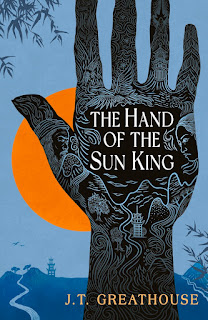
Book review: The Hand of the Sun King (Pact and Pattern #1), by J.T. Greathouse


The Hand of the Sun King (Pact and Pattern #1), by J.T. Greathouse

The official My name is Wen Alder. My name is Foolish Cur.

All my life, I have been torn between two legacies: that of my father, whose roots trace back to the right hand of the Emperor. That of my mother's family, who reject the oppressive Empire and embrace the resistance.

I can choose between them - between protecting my family, or protecting my people - or I can search out a better path . . . a magical path, filled with secrets, unbound by empire or resistance, which could shake my world to its very foundation.

But my search for freedom will entangle me in a war between the gods themselves . . .

The Hand of the Sun King is a complex and beautifully written fantasy novel, the first in a series, about Wen Alder, a young man blessed with a great talent for magic and also a great talent for getting himself (and others) into trouble. We follow him from childhood as he tries to find his way in the world, navigating between the two main influences on his life: the Empire and its magic, represented by his father's side of the family; and the rebels who use an older form of magic and who oppose the Empire, represented by his mother's side of the family and in particular by his grandmother. (His grandmother is the one who gives him his other name, Foolish Cur, which describes him to a T for much of his life.)

These conflicted loyalties pull Alder in two opposing direction, and the defining struggle of Alder's life is his quest to not just find a middle way between the empire and the rebellion, but to find a different kind of magic between the two. As a child, he first learns his people's traditional magic from his grandmother. Later he ends up serving the Empire, honing his skills in the school of magic his father once attended. Though he is no blithe follower of the empire, his ambition still leads him to do the empire's work, even as he also continues to search for what he hopes will be a different magical path. In the end, Alder's choices have calamitous and violent repercussions for those around him and himself.

Greathouse creates a grand and intriguing world in this book. The depth and detail of the magic system, the various ways that people in the empire use and access magic, are fascinating. Many different peoples and many different kinds of magic exist under the rule of the emperor and I like how Greathouse describes a system of magic that reflects the political reality of colonization. The empire colonizes, uses, and abuses both people and resources to maintain and grow its own power and influence and they do the same with magic. Politics and magic are intertwined in ways that make Alder's quest a dangerous and radically political act on several levels.

On a personal level, beyond the politics, Alder is a person who is obsessed with magic and how to use it. He revels in it, loves it, obsesses over it and he is truly a powerful wielder of magic, though through much of the book, he has to learn the hard way how to use magic without destroying himself in the process. 

As good as Alder is at using magic, this is definitely not a simple story about One Good and Perfect Hero. One of the things I really appreciate about this book is that Alder is deeply flawed. His ambition and his pride often make him do rash, ill-advised, and even terrible things, hurting himself and others in the process. He has a hard time understanding just how frightening his power, and his personality, might seem to others.

Greathouse is an excellent writer, and I love how he gives us time to get to know Alder and his world, revealing the layers of the world, the characters, and the ways of magic, before ratcheting up the tension in the second half of the story as Alder and his existence are torn apart in harrowing fashion.  

The story ends with a mind-blowing bang that upends everything we've come to understand about the world so far. At the end we're also introduced to a new set of powerful characters, and I can't wait to see where Greathouse takes this story in the next book.

Buy The Hand of the Sun King.

🕮

Become a Patreon supporter / Support me on KoFi


September 29, 2021

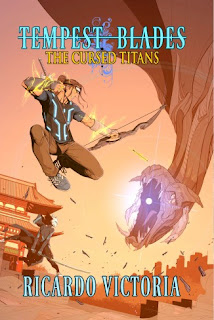
Book review: THE CURSED TITANS (Tempest Blades #2) by Ricardo Victoria


The official book synopsis:

The triennial Chivalry Games have returned! After helping to destroy the Withered King, Alex and the rest of the group find out that saving the world has consequences. While he is secretly battling with depression and with the Alliance on the verge of collapse, a diplomatic summit and the Chivalry Games—to be held in the far off Kuni Empire—may give everyone the opportunity to turn things around. Alex builds a team to represent the Foundation in the Games, facing off against the best fighters in the world. When an ancient being tries to raise legendary nightmares known as Titans using the peace talks as a trap, Alex has to find a way to save everyone before it is too late. Alex must learn that he is not truly alone to save the world from the chaos of the Titans. In a world where magic and science intermingle, anything is possible. 

My review:

Just like The Withered King, the first book in Ricardo Victoria's Tempest Blades series, The Cursed Titans is an entertaining and action-packed blend of science fiction and fantasy, with a great sense of humour, an anime vibe, and filled with a group of great characters. Reading The Cursed Titans, I was struck by how well Victoria handles the large cast of characters: everyone has a backstory and distinct personality of their own, and everyone gets their own moments to shine. It's fun to read a story that features such a terrific group of friends, enemies, and frenemies.

There are a lot of fast-paced action sequences in the book, with the characters finding themselves in tight spots and having to finagle and fight their way out - usually by working together. I especially love how the magical weapons in the story, the various Tempest Blades, have a real mind of their own, and often display strong opinions about who should and should not wield them.

In the midst of monsters and mayhem, and a huge event called the Chivalry Games, Victoria explores some darker and more personal themes in this book, including anxiety and depression, and how difficult it can be for people to ask for help, and for others to realize they need help, when it might seem to people on the outside like they ought to be fine and able to handle everything being thrown their way. It's a nice touch to allow these characters, who often have outstanding fighting skills and wield astonishing magical weapons, to deal with real human problems, including mental health issues.

The importance of friendship is a crucial part of The Cursed Titans, with loyalties being challenged and strengthened through the story. I particularly like the bond between Joshua and Kasumi in this book. Joshua is dealing with some terrifying issues, like the fact that he isn't always entirely Joshua at all but rather a terrifying beast-like creature, and the people around him often treat him like a danger, a liability, and even a monster (and not totally without reason). In spite of that, Kasumi's friendship and loyalty is unwavering, and I really enjoyed reading about these two. 

Victoria has created a unique and rich world in his books where science fiction and fantasy mingle beautifully, and there is plenty of action and adventure woven into every part of the story. A solid, entertaining read with a grand cast of characters and a real human touch.

🕮

Buy the book.

September 3, 2021

Book review: MALEFACTOR by Robert Repino

The official blurb:

Over a decade has passed since the ant queen began her apocalyptic war with the humans. In the aftermath, she leaves behind a strange legacy: a race of uplifted animals, the queen’s conscripts in the war effort, now trying to make their way in the world they destroyed. While the conflict has left deep scars, it has also allowed both sides to demonstrate feats of courage and compassion that were never possible before. And now, after years of bloodshed, the survivors have a fleeting chance to build a lasting peace.

But peace always comes with a price. The holy city of Hosanna—where animals and humans form a joint government—finds itself surrounded by wolves who are determined to retake the land. A powerful matriarch has united the rival wolf packs, using a terrible power harnessed from the Queen herself.

Soon, the looming violence pulls in those who sought to escape. The war hero Mort(e) suspects a plot to destroy Hosanna from within, and recruits a team of unlikely allies to investigate. Falkirk, captain of the airship Vesuvius, must choose between treason and loyalty to save the city. And D’Arc, sailing aboard the al-Rihla, learns that the wolves may have triggered a new cycle of life for the Colony, bringing a final reckoning to animal and human alike. Once reunited, the three outcasts begin a journey into wolf territory to face the last remnant of the queen’s empire. But while destiny has drawn them together, it may destroy them as well, for even love, courage, and honor may not be enough to stop the forces of destruction set to be unleashed on the world.


My review:

Malefactor is the spectacular finale to Repino's War With No Name series, and it is a harrowing, ferocious, and bitingly sharp tale that packs a real emotional punch, especially in its final chapters. 

If you're not familiar with the books, here's a quick intro to the world we find ourselves in: more than ten years ago, almost overnight, all the animals in the world that were once tame or wild or farmed, evolved into bipedal, fully sentient creatures capable of speech and conscious thought. Behind that transformation lurked a hidden enemy: an ant colony led by a formidable ant queen, hellbent on destroying all humans. After this Change, a terrible war began between humans and the animals they once dominated, and while the ant colony was destroyed (so it was thought, at least), the world was left broken.

Like all the books in this series, Malefactor is a wild, absolutely bonkers ride from start to finish. The rising threat of the united wolf packs, and the possibility that the ant colony has returned to wreak havoc on the Earth, means that every course of action is desperate and fraught with danger. Along the way there's a puppy in peril, giant fighter ants, a train fight/heist sequence that had me on tenterhooks, herbivores turning carnivorous, humans turning themselves into wolves, and, best of all: a combative, hilariously gnarly, odd-couple relationship between a bat and a beaver that made me laugh and broke my heart. 

The power struggles between (and within) the various wolf packs, and the machinations of the wolves' new human allies, provide some of the darkest scenes of the series (and that's saying something). It drives home the point that while the animals succeeded in throwing down the old world, it has not been possible to build a new world that is fit for anyone, human or animal, to live in. At least not yet.

We see this world through a few different points of view in this book, but the crucial ones, for me, are the the two main protagonists of the series: D'Arc (formerly the pet dog Sheba) and Mort(e) (formerly the house cat Sebastian). And while Mort(e) plays a big part in Malefactor, it is D'Arc that is at the center of the story. Her quest is intensely personal in this book as she finds herself lost at sea, then suffers a devastating loss, and finally has to fight to save her family and the fragile shared animal/human community of Hosanna. 

Throughout the books, the relationship between Mort(e) and D'Arc has been the heart of the story. From the beginning, they have been linked by the bond they shared even before the Change, back when they lived together as pets. While their bond isn't broken in Malefactor, they clearly have opposing views on how to live in this seemingly grimdark world. Mort(e), worn down and made ever more cynical by the years of strife and warfare, would rather withdraw and live out his days in whatever peace he can find away from the struggle. For D'Arc, leaving the fight to others is not an option. She still believes it's possible to overcome the old hatred and build something new: a society where humans and animals can live and work together.

As dark as this book may seem (and there are some truly bone-chilling moments here, one of which involves the deer turning on the wolves in a scene that will haunt my nightmares), there are gleams of light through it all. That light is there in D'Arc's dogged (ha!) determination to keep fighting for something better, even when it seems futile. And it's there in the loyalty and friendship that bind many of the characters together, even as the world seems to crumble around them.

This light is especially evident in the storyline that follows a bat and a beaver--enemies right down to the bone--on a madcap, seemingly impossible quest for freedom. Following these two characters, both deeply scarred and tainted by previous events, as they are thrown together by fate and necessity, provides some of my favourite scenes in Malefactor. They have both done terrible things for causes they thought were just. They have every reason to mistrust and hate each other, but they end up having to work together in order to save themselves and, maybe, the world. This storyline provides some darkly funny moments and some pivotal, emotional scenes as well.

In Malefactor, as in the earlier books in the series, Repino consistently returns to this theme: the importance of friendship, loyalty, and love between individuals as maybe the only source of hope of salvation in a world where brute force and extremist fervour seem almost impossible to defeat.

In my review of Mort(e) in 2016 I wrote: 

At its most basic, this is a tale of friendship and love. Mort(e) the (former) cat doesn’t believe in grand plans and prophecies. He fights and makes sacrifices in the struggle against the humans, but he is not loyal to, or motivated by religion or politics or ideology. He does believe in friendship and loyalty and love, because he has experienced those things: not with humans, but with Sheba the dog, before the world changed. Through every hardship and every battle, the memory of that sustains him.

While D'Arc/Sheba has in many ways left Mort(e) behind in Malefactor, and while they are separated for most of the book, I kept hankering for the moment when they would be brought together again. When they are finally truly reunited, Repino finds a way to pay off the emotional investment I've had in these characters and their relationship in a totally unexpected way that also felt absolutely, genuinely right. (And yes, it made me cry.)

Malefactor is an intense book, full of  brutal battles, daring escapes and rescues, heart-wrenching choices, terrible betrayals, and fragile hope. As far as I'm concerned, it's a must-read.

🕮

Buy Malefactor

🕮

Become a Patreon / Support me on KoFi


July 1, 2021

YA books and children's books: recommendations from me (and my kids)

Summer break is just starting here in British Columbia, Canada, where I live and in many other parts of the world. With all that time off looming, maybe your kids or teens are looking for books, or maybe you feel like reading some YA / Middle Grade/ children's books yourself (there's a lot of good stuff in the kids/YA section). 

Here are some of my favourites and some of my kids's favourites (they are 14 and 18 right now). Some are old, some are new, and of course, this is only a small fraction of what's available out there.


I want to start off with a special shoutout to Rick Riordan's books (my daughter loved the Percy Jackson series and I tore through the Magnus Chase books) and his imprint Rick Riordan Presents which is teeming with amazing writers and books for kids and teens. You can start off with:

Tristan Strong Punches a Hole in the Sky by Kwame Mbalia

This is a gripping, hugely entertaining read and the first in a series of books about Tristan's adventures. 

Seventh grader Tristan Strong feels anything but strong ever since he failed to save his best friend when they were in a bus accident together. All he has left of Eddie is the journal his friend wrote stories in. Tristan is dreading the month he’s going to spend on his grandparents’ farm in Alabama, where he’s being sent to heal from the tragedy. But on his first night there, a sticky creature shows up in his bedroom and steals Eddie’s journal. Tristan chases after it–is that a doll?–and a tug-of-war ensues between them underneath a Bottle Tree. In a last attempt to wrestle the journal out of the creature’s hands, Tristan punches the tree, accidentally ripping open a chasm into the MidPass, a volatile place with a burning sea, haunted bone ships, and iron monsters that are hunting the inhabitants of this world. Tristan finds himself in the middle of a battle that has left black American gods John Henry and Brer Rabbit exhausted. In order to get back home, Tristan and these new allies will need to entice the god Anansi, the Weaver, to come out of hiding and seal the hole in the sky. But bartering with the trickster Anansi always comes at a price. Can Tristan save this world before he loses more of the things he loves?

Some of the best writers of speculative fiction today have books out with the Rick Riordan Presents imprint, including Yoon Ha Lee, Roshani Chokshi, and Rebecca Roanhorse, so there is a real treasure chest of stories to explore here, including:


Sal & Gabi Break the Universe and Sal & Gabi Fix the Universe by Carlos Hernandez

Sal & Gabi Break the Universe (and its sequel) is funny, sharp, smart, and full of magic, science, food, friendship, family, life, love, and even death, and Hernandez keeps the story moving at a great pace throughout. It’s a zany book, but there’s real heart in it, too, and the laughs are good laughs – with jokes that are irreverent, hilarious, and thoughtful in a way that I really appreciated as I read the story. (Read my full review of the first book from 2019.)

🕮

The Ninety-Ninth Bride by Catherine Faris King

Dunya is fifteen when her father, the Grand Vizier, gives her over to the mad Sultan for his bride. Ninety-eight Sultanas before Dunya have been executed, slaughtered at the break of dawn following their first night with their new husband. But on her own wedding night, the ninety-ninth bride finds help from the mysterious and beautiful Zahra, who proposes to tell the Sultan a story…

A lovely and beautifully told twist on One Thousand and One Nights: “...a story of sisters and magic, and a kingdom on the brink of disaster.

🕮

The Evil Wizard Smallbone by Delia Sherman

I loved this book and so did my daughter (she was 10 when we read it). It's got magic, spells, shapeshifting, a very intriguing bookshop, a werewolf with a coyote pack riding motorcycles, plus a lot more. All of it is mixed with a lot of real life tragedy and comedy, and all the children in it (especially the main character Nick) are engaging and realistically ornery characters. It is moving without being maudlin, and a real page-turner. Highly recommended for kids and adults.

🕮


The Girl Who Drank the Moon, by Kelly Barnhill

Every year, the people of the Protectorate leave a baby as an offering to the witch who lives in the forest. They hope this sacrifice will keep her from terrorizing their town. But the witch in the forest, Xan, is kind and gentle. She shares her home with a wise Swamp Monster named Glerk and a Perfectly Tiny Dragon, Fyrian. Xan rescues the abandoned children and deliver them to welcoming families on the other side of the forest, nourishing the babies with starlight on the journey. 

One year, Xan accidentally feeds a baby moonlight instead of starlight, filling the ordinary child with extraordinary magic.

An amazing story about family, magic, and what happens when you keep secrets (even from yourself). It's beautifully written with a lot of tragedy and sorrow and strife beneath the beauty of the prose. I loved this story so much, and it made my daughter a Barnhill fan (check out Barnhill's other books: they're all fantastic)!

🕮

Astrid Lindgren’s books

Some of Lindgren’s books, like Ronia, the Robber’s Daughter, Mio, My Son, and The Brothers Lionheart take place in fantasy worlds. Others, like The Adventures of Pippi Longstocking, and Karlson on the Roof blend fantasy elements and the real world. And many, like Lotta on Troublemaker Street, take place in the real, Swedish world of the early 20th century. No matter what the setting, they’re all great reads for kids. (Confession: I detested Karlson of Karlson on the Roof as a child and I still do. Nothing to do with the writing, but the character of Karlson infuriated me even as a child: I thought he was just too tude and selfish and mean. Lots of people love him and the books, though, and find him funny rather than annoying!)

🕮

The Books of Earthsea by Ursula K. Le Guin

It’s six books now, all outstanding works of literature, and the original trilogy were part of what made me fall in love with fantasy in the first place. Le Guin pitches you into a vivid and mesmerizing world with magic, dragons, wizards, “true names”, and dark undercurrents of death and fear. Both the older books, and the newer ones (starting with Tehanu), are brilliant works of fiction. The Tombs of Atuan in particular absolutely floored me as a teenager and still does. 

The books in the series are:

  1. A Wizard of Earthsea
  2. The Tombs of Atuan
  3. The Farthest Shore
  4. Tehanu
  5. Tales from Earthsea
  6. The Other Wind

Read my review of Tales From Earthsea.

🕮


The Dark Is Rising Sequence by Susan Cooper

These books were part of what turned me into a huge fan of fantasy fiction in my tweens/teens. Cooper weaves together fantasy with bits of Celtic folklore, and strands of the King Arthur legend. The story is set in 1970s Britain, as well as ancient Britain, and other fantasy-realms in-between the worlds.

The books in the series:

  1. Over Sea, Under Stone
  2. The Dark Is Rising
  3. Greenwitch
  4. The Grey King
  5. Silver on the Tree

🕮

Mrs. Frisby and the Rats of NIMH by Robert C. O’Brien

Mrs. Frisby, a widowed mouse with four small children, is faced with a terrible problem. She must move her family to their summer quarters immediately, or face almost certain death. But her youngest son, Timothy, lies ill with pneumonia and must not be moved.

Fortunately, she encounters the rats of NIMH, an extraordinary breed of highly intelligent creatures, who come up with a brilliant solution to her dilemma. And Mrs. Frisby in turn renders them a great service.

This is a wonderful tale about some very unusual rats, and how they end up helping Mrs. Frisby move her house, and save her family. It was made into a Disney movie as well, but (at least in my opinion) the book is far superior.

🕮

The Wrinkle In Time Quintet by Madeleine L'Engle

Madeleine L’Engle’s classic middle-grade series, A Wrinkle In Time Quintet, follows the lives of Meg Murry, her youngest brother Charles Wallace Murry, their friend Calvin O’Keefe, and her twin brothers Sandy and Dennys Murry. Beginning with A Wrinkle In Time, each novel features the characters encountering other-worldly beings and evil forces they have to defeat in order to save the world. The characters travel through time and space and even into Charles Wallace’s body in this beloved series that blends science fiction and fantasy.

If you’re looking for a classic read for kids, check out the Wrinkle in Time Quintet by Madeleine L’Engle. I read all these books with my kids, and they are fantastic (though some of them get pretty darn weird. I'm looking at you, Many Waters!)

  1. A Wrinkle in Time
  2. A Wind in the Door
  3. Many Waters
  4. A Swiftly Tilting Planet
  5. An Acceptable Time

🕮

Comet in Moominland (and all the other Moomin-books), by Tove Jansson

Finland’s Tove Jansson created a unique, strange and enchanting (strangely enchanting? enchantingly strange?) world in her stories about the Moomin-family and their life in Moomin-valley. If you haven’t checked out this particular fantasy-realm, it’s well worth a visit.

Tove Jansson (1914–2001) was born in Helsinki and spent much of her life in Finland. She is the author of the Moomin books, including Comet in Moominland and Finn Family Moomintroll. Born into an artistic family—her father was a sculptor and her mother was a graphic designer and illustrator—Jansson studied at the University College of Arts, Crafts and Design in Stockholm, the Finnish Academy of Fine Arts, and L’École des Beaux-Arts in Paris. In addition to her Moomin books, she also wrote several novels, drew comic strips and worked as a painter and illustrator. In 1966, she was awarded the Hans Christian Andersen Medal for her body of work. Jansson had a studio in Helsinki but spent most of her time at her home on a small island called Klovharu.

🕮

Beezus and Ramona, by Beverly Cleary

Having a little sister like four-year-old Ramona isn’t always easy for Beezus Quimby. With a wild imagination, disregard for order, and an appetite for chaos, Ramona makes it hard for Beezus to be the responsible older sister she knows she ought to be…especially when Ramona threatens to ruin Beezus’s birthday party. Will Beezus find the patience to handle her little sister before Ramona turns her big day into a complete disaster? 

This book was published way back in 1955, but it holds up really well all these years later. Maybe because it's so honest about what sibling-hood and family life can really be like: full of chaos and strife and love, all at the same time. Beezus and Ramons is absolutely delightful and at times hilariously, laugh-out-loud funny. Ramona is the quintessential trouble-making little sister, and Beezus is her long-suffering older sister. The stories about their trials and tribulations are so close to real life, I feel I might have lived some part of this.

🕮

Howl’s Moving Castle by Diana Wynne Jones

Sophie has the great misfortune of being the eldest of three daughters, destined to fail miserably should she ever leave home to seek her fate. But when she unwittingly attracts the ire of the Witch of the Waste, Sophie finds herself under a horrid spell that transforms her into an old lady. Her only chance at breaking it lies in the ever-moving castle in the hills: the Wizard Howl's castle. To untangle the enchantment, Sophie must handle the heartless Howl, strike a bargain with a fire demon, and meet the Witch of the Waste head-on. Along the way, she discovers that there's far more to Howl—and herself—than first meets the eye.

In this giant jigsaw puzzle of a fantasy, people and things are never quite what they seem. Destinies are intertwined, identities exchanged, lovers confused. The Witch has placed a spell on Howl. Does the clue to breaking it lie in a famous poem? And what will happen to Sophie Hatter when she enters Howl's castle?

My kids already loved Hayao Miyazaki’s movie version of this story before we read the book, but the book is a masterpiece in its own way. The story and characters are rather different than in Miyazaki’s adaptation, but I think that the differences just makes the reading more interesting (my kids agreed). Also, Sophie’s adventures after she’s cursed by the witch of the Waste, her encounter with the wizard Howl, and the fire demon Calcifer, make for a great story to read aloud.

🕮

The Wings of Fire series by Tui T. Sutherland

My daughter was obsessed with this series for a long time, and why not? It has dragons, dragons, and MORE dragons. Also, Sutherland has a real knack for writing stories that are very hard to put down. "Just one more chapter", my daughter would say when I read these books to her, and usually, I kept reading because I wanted to know what would happen next too. This is a huge series by now, with a ton of books, maybe enough to last a voracious reader through the summer?

More about the world of these books:

Pyrrhia is a world ruled by dragons. Dragons are everywhere, from the depths of the sea to the mountain peaks, from the icy arctic to the tropical rainforest. Each tribe has adapted to their habitat and is fiercely hostile to outside dragons. For instance, SeaWings can breathe underwater, but they can’t produce fire like the SkyWings. SandWings have poisonous tails like scorpions, but they’d die quickly of the cold in the frozen caves of the IceWings. But all the tribes have a matriarchal system where each is ruled by a queen—and all dragons, no matter where they live, have a powerful love of treasure.

There are humans in this world, but the dragons think of them as prey, like the cows and deer and buffalo. Then again, the dragons have noticed that human prey acts a little odd sometimes. Humans keep showing up outside dragon caves, waving tiny swords and trying to start a fight (which doesn’t bother the dragons much; if the prey chooses to come to them to get eaten, that’s quite all right). The humans also seem as enamored of treasure as the dragons are themselves, and will run off with gold or jewels if they get anywhere near the dragons’ hidden hoards. As a result, the dragons see humans as annoying magpies and refer to them as “scavengers.”

🕮

Red Shift, by Alan Garner

Three separate stories, three utterly different lives, distant in time and yet strangely linked to a single place, the mysterious, looming outcrop known as Mow Cop, and a single object, the blunt head of a stone axe: all these come together in Alan Garner’s extraordinary Red Shift.

This book is a twisting, trippy and hard-to-describe tale that winds through three different historical times, all set in the same place. It’s a story that I first read in my teens, but it has stayed with me over the years. It is tragic and brutal and unsettling, and also full of sadness and loss, beauty and love. I really love how Garner uses the same area for each storyline, and the connection to the land, to the landscape, is strong here and part of the story's innate magic.

🕮

My daughter read her way through three series of books by Neal Shusterman recently. I haven't read the books myself, but based on her reaction, and if your teen is into the darker side of things, I'd recommend them:

Arc of a Scythe series by Neal Shusterman

In a future where no one dies unless a Scythe mandates it, Citra and Rowan are chosen to learn the “art of killing” in preparation for the scythedom. What follows is a thrilling adventure where the two must work together to uncover the corruption in their supposed utopian society.

The Unwind Dystology by Neal Shusterman

In Neal Shusterman’s New York Times bestselling Unwind Dystology series, three friends fight to change their fate in a world where all teenagers are at risk of being unwound—having their bodies dismantled and all the parts distributed for transplant.


The Skinjacker trilogy by Neal Shusterman

Nick and Allie don’t survive the car accident—and their souls don’t exactly get where they’re supposed to go. Instead, they’re caught halfway between life and death, in a sort of limbo known as Everlost: a shadow of the living world, filled with all the things and places that no longer exist. It’s a magical, yet dangerous, place where bands of lost kids run wild and anyone who stands in the same place too long sinks to the center of the Earth.

When they find Mary, the self-proclaimed queen of lost souls, Nick feels like he’s found a home, but Allie isn’t satisfied spending eternity between worlds. Against all warnings, Allie begins learning the “Criminal Art” of haunting, and ventures into dangerous territory, where a monster called the McGill threatens all the souls of Everlost.


🕮
June 24, 2021

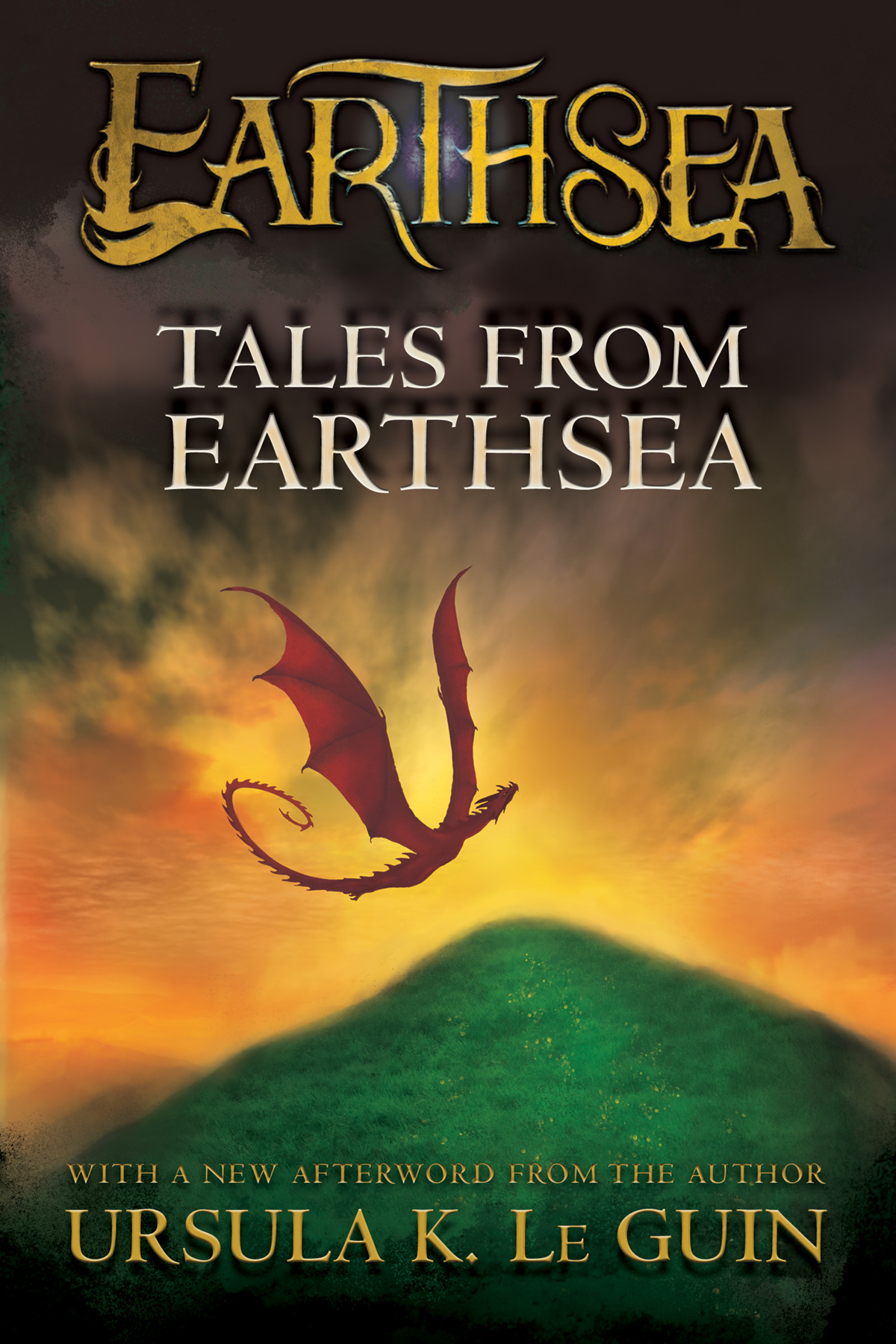
A review of Ursula K. Le Guin's TALES FROM EARTHSEA + a love letter to Le Guin's fiction + two old interviews with Le Guin

Ursula K. Le Guin is one of my all-time favourite authors, and I know that she has hugely influenced me as both a reader and a writer. I read the first three books (A Wizard of Earthsea, Tombs of Atuan, and The Farthest Shore) as a tween and teen, and at the time, the books shook me to my core like few other books I’ve read. The power of her stories, her writing style, her language, and her unique storytelling voice all made a huge impression on me. The Tombs of Atuan in particular is a book that moved me so deeply that I believe it has become a part of my own “writing DNA”.

The Earth is beautiful, and bright, and kindly, but that is not all. The Earth is also terrible, and dark, and cruel. The rabbit shrieks dying in the green meadows. The mountains clench their great hands full of hidden fire. There are sharks in the sea, and there is cruelty in men’s eyes. And where men worship these things and abase themselves before them, there evil breeds; there are places made in the world where darkness gathers, places given over wholly to the Ones whom we call Nameless, the ancient and holy Powers of the Earth before the Light, the powers of the dark, of ruin, of madness….

-Sparrowhawk/Ged to Arha/Tenar, in The Tombs of Atuan

Le Guin has such a restrained and powerful way of writing: her stories are lean and trim without unnecessary chatter or extraneous explanations. Her prose is poetic and straightforward at the same time, and she is able to express so much with very little. The quote above from The Tombs of Atuan (part of the Earthsea cycle) is a prime example: Ged’s way of speaking is so evocative and expressive that it feels like a kind of magic in itself, and since he is a wizard that is just as it should be.

When I read a Le Guin book or short story, I often re-read passages several times just because the language is so sparse and beautiful – there’s a power there that goes beyond the story itself.

Le Guin wrote primarily fantasy and science fiction, so she didn't always get the mainstream respect she so richly deserved, but if I were handing out Nobel prizes in literature, she would have won that award for sure.

The original trilogy of Earthsea – A Wizard Of Earthsea, The Tombs Of Atuan, and The Farthest Shore – were published in 1968-1972. The short story collection Tales From Earthsea was published in 2001, so it is a much more recent addition to the Earthsea Cycle, just like the novels Tehanu (published in 1990) and The Other Wind (published in 2001).

In Tales From Earthsea, Le Guin re-visits and expands her vision of the world and the history of Earthsea, and also delves deeper into its lore and its magic. The original trilogy took place in a time when the majority of the people of Earthsea saw magic as something only men could (and should) wield: “Weak as women’s magic, wicked as women’s magic”, as the saying goes in the stories. However, in Tales From Earthsea it is revealed that women once wielded magic powers that rivaled the men’s, and that both women and men founded the magic school on the island of Roke – a crucial center of power that later allows only men to be educated as wizards.

As you’d expect from one of the best fantasy writers in the world, Tales From Earthsea is an outstanding collection of short stories. Le Guin’s language is as beautiful as ever; her stories are captivating from the first word and sentence; and the characters are just as strong and alive as they are in her novels. Two of the things that have always appealed to me in Le Guin’s work are her lack of sentimentality, and her reluctance to create characters that are either simply good or simply evil. Instead, the characters in her stories are flawed and damaged and often difficult people to deal with, and that is why they feel so real, and close, and true.

If you’ve read the other Earthsea books, Tales From Earthsea is a bit like returning to a favourite place: you get to re-visit familiar places and events, while Le Guin gives you a new perspective on, and new insight into, the vivid world she’s created. It's both fascinating and inspiring to see the way Le Guin was re-thinking and re-shaping the world of Earthsea in her later years. Without rebuking her older work or rigidly defending it, the newer books are in conversation with the older ones, and she allows herself to change her mind about some of the choices she made as a younger writer.

In ‘The Finder’ Le Guin tells the story of how the school of magic was established on Roke island; while ‘Darkrose and Diamond’ is a tale about a troubled romance between the daughter of a witch and the son of a merchant. ‘The Bones of the Earth’ (one of my favourites in this collection) is the true story of how the legendary wizard Ogion the Silent handled a massive earthquake – a part of Earthsea-lore that hearkens back to the first books.

‘On the High Marsh’ is vintage Le Guin: a beautiful tale with a hidden darkness at its core, about a mysterious healer haunted by a past he can’t remember, and what happens when he arrives in a remote village where the livestock are dying.

For me, the standout story in the book is ‘Dragonfly’. The main character in this short story is a woman named Irian who is driven by a fierce need and yearning to find out what her true destiny is. And in order to find the answers she seeks, Irian tries to enter the Wizard-island of Roke even though women are strictly forbidden there. It’s a fantastic story in its own right, and it also ties together the final two Earthsea novels: Tehanu and The Other Wind.

Get Tales From Earthsea.

The Earthsea Cycle contains 6 books:

  1.  A Wizard of Earthsea
  2.  The Tombs of Atuan
  3. The Farthest Shore
  4. Tehanu
  5. Tales from Earthsea
  6. The Other Wind

Two interviews with Le Guin:

Den of Geek has an interview with Ursula K. Le Guin from 2015 that is a must-read. I’ll share two quotes to give a flavour of the thing, but it’s very much worth it to read the entire piece.

First, one of her answers dealing with snobbish attitudes towards fantasy and science fiction. (She discusses this at length in the interview, including how Margaret Atwood’s publisher basically forbade her from calling her science fiction books, science fiction.)

You’ve spoken and written very cogently for decades about the snobbery that imaginative literature – science-fiction and fantasy – has from the literary establishment. Do you think we’ll ever reach a point when those snobbish attitudes don’t exist?

Some people have to be snobs, don’t they? They can’t exist without looking down on something. There will always be such people, but tomorrow the fashion could change and then we’ll be looking down on realism!

The good thing is that in my life, we really have come quite a long way to return to sanity in admitting that imaginative literature is probably the oldest kind of storytelling and will always be with us – thank goodness – and that realism is just one kind of way of writing fiction, but not necessarily the best. Certainly not automatically the best, which is what the snobbery thing was to do with. If it was realistic it was inherently better than anything imaginative and therefore the silliest realist was better than Tolkien. Well, it just, it won’t wash, as we say.

And a second quote, that really resonates with me, about the difference between the books that make an impression on you as a young person, vs. the books that make an impression on you when you’re older. I strongly agree with her here: the things that affect you when you’re a child or a teenager, shape your life and your thinking in a very different and (I believe) more profound way than the things you read later in life.

My question then is, do the books that you eat now nourish you as much as the ones you ate when you were a child and a teenager?

Oh, no no. That’s such a good question. Things that kids read and the thing that hits the kid as a kid gets into their bones. The things I read now get into my head, sure enough. I think about them. I might read something and it’ll turn into a poem next month or something, but that early stuff, that becomes a part of your whole being in a different way, and you can’t get rid of it.

Read the whole interview at Den of Geek.

🕮

The second interview is also from 2015, and it's from Interview Magazine. An excerpt:

SICHA: In the book you return to this idea of writing for art’s sake, which is very much, I feel, out of vogue. We’ve gotten accustomed to talking about money and the commerce of writing and how you should be treated as a writer, and it’s sort of hysterical when you sit back and think about it.

LE GUIN: And there are so many guidebooks to that kind of writing: “How to be a success,” in other words. But I certainly didn’t feel like I had anything to add there, since the way I came into writing was a pretty sure way to not be a success.

SICHA: A few people may talk about the “craft of writing,” but they sound phony. The way you put it is very realistic: that this is an important thing to do if you care about writing.

LE GUIN: The word craft these days has this sort of funny, twee sound, like some little artisan putting the yeast in his handcrafted bread. Craft is how you do something well—anything. You can do anything with craft or with skill, or without it. Writing an English sentence takes a good deal of craft and skill. Writing a good English sentence takes a lot more of it.

Le Guin's book on the craft of writing is, Steering the Craft, is, as you would expect, excellent. Some quotes from the book:

  • “An awareness of what your own writing sounds like is an essential skill for a writer. — Narrative writers need to train their mind’s ear to listen to their own prose, to hear as they write.”
  • “Plot is a marvelous device. But it’s not superior to story, and not even necessary to it.”
  • “We don’t have to have the rigid structure of a plot to tell a story, but we do need a focus. What is it about? Who is it about?”
And if you want more Le Guin, check out the wonderful documentary The Worlds of Ursula K. Le Guin.

🕮

Become a Patreon / Support me on KoFi


June 18, 2021

#FridayReads - it's all about Ray Bradbury

One of the first science fiction books I remember reading as a child, was a short story collection: The Martian Chronicles by Ray Bradbury. Together with Tolkien's Lord of the Rings and Le Guin's original Earthsea trilogy, this was pretty much what ignited my love for speculative fiction.

The Martian Chronicles is an old book now, and like many other works of science fiction and fantasy from the olden days, it's a bit dated in parts. It was published in 1950 and the individual stories were first published earlier than that in various magazines, then gathered together in a book, and given a framing narrative recounting the history of humanity’s exploration and colonization of Mars.

There is so much I love about this book: the beauty of Bradbury’s prose, the creeping terrors that often lurk beneath the surface of seemingly everyday places and situations in his stories, and the blend of science fiction, horror, and poetry that permeates the whole work. This is not hard science fiction -Bradbury was never that – he is always more interested in people than technology.

Like I said, I've been a Bradbury fan since I was a child, and I love his short fiction. For this #FridayReads post, in addition to The Martian Chronicles, I have a list of 10 of my favourite Ray Bradbury short stories (as previously seen on my website). Many of these stories have no doubt influenced and inspired my own writing over the years.

1. The One Who Waits

This story was included in the short-story collection The Machineries of Joy, and to me, it’s not just a quintessential Ray Bradbury story, it is THE quintessential science fiction short story. It’s ominous and unsettling right from the start:

I live in a well. I live like smoke in the well. Like vapor in a stone throat. I don’t move. I don’t do anything but wait. Overhead I see the cold stars of night and morning, and I see the sun. And sometimes I sing old songs of this world when it was young. How can I tell you what I am when I don’t know?

Beautifully written and haunting.

2. The Veldt

Bradbury is skilled at turning something we’ve been brought up to think of as innocent – like mushrooms and babies, for example – into something sinister. In "The Veldt", child’s play becomes deadly, and the relationship between two children and their parents takes a horrifying turn. This story also includes a playroom reminiscent of Star Trek TNG’s “holodeck”. It’s a true Bradbury classic that has been adapted for TV several times (by NPR, and Canadian television for example) and has also been turned into a movie. It was included in The Illustrated Man.

3. The Small Assassin

This short story is another excellent example of how Bradbury can create a sense of ominous dread. A pregnant woman begins to suspect that the child she is carrying is evil. A ridiculous notion, of course. Right? Except that it turns out she’s correct… It was included in the anthology Dark Carnival, and can also be found in several other Bradbury collections.

4. “Boys! Raise Giant Mushrooms in Your Cellar!”

This is one of the first Bradbury stories that I remember reading as a child and it’s been stuck in my mind ever since. An alien invasion that takes place in people’s basements? Of course. This story can be found in the Best-of-Bradbury collection The Stories of Ray Bradbury.

5. The Third Expedition

Without a doubt one of the Bradbury stories that has made the biggest impression on me. The story is taken from Bradbury’s amazing The Martian Chronicles. In this particular tale, an expedition from Earth to Mars encounters a town that seems eerily, yet comfortingly, familiar to them. It’s even populated by long-lost relatives and family! Of course, it doesn’t have a happy ending.

6. The Martian

Yet another short story from The Martian Chronicles. This time, an elderly couple from Earth have settled on Mars and one night they encounter a person they think is their long-dead son. The sense of sadness and foreboding that permeates this short story is what really gets to me:

The cold wind blew and the thin rain fell upon the soil and the figure stood looking at them with distant eyes.

And no, this one doesn’t exactly have a happy ending either.

7. The Million-Year Picnic

This one is also from The Martian Chronicles, and it’s the final story in that particular book. This is Bradbury at his poetic, poignant best. I can remember getting goosebumps when I read the ending the first time.

“I’ve always wanted to see a Martian,” said Michael. “Where are they, Dad? You promised.”

“There they are,” said Dad, and he shifted Michael on his shoulder and pointed straight down.

The Martians were there. Timothy began to shiver.

8. The Crowd

How swiftly a crowd comes… like the iris of an eye closing in out of nowhere.

Again, Bradbury picks something familiar: the way crowds tend to gather at the site of an accident. But they way he tells the story, we just know that there is something dark and terrifying happening beneath the surface.

“Is he dead?” “No, he’s not dead.” “He won’t die. He’s not going to die.”

This short story is included in Dark Carnival, and also The Stories of Ray Bradbury.

9. Skeleton

A rather macabre story that was included in The October Country. I’ll just quote the Wikipedia entry about it without spoiling it any further:

A man becomes convinced his skeleton is out to ruin him, and consults an unorthodox specialist.

10. Tomorrow’s Child

I can vividly remember reading this story as a child: after all, a story that features a human baby that has accidentally been turned into a blue pyramid is bound to make an impression. It’s a whimsical story more than an ominous one, and probably the most light-hearted of the tales I’ve included in this list. It’s included in the anthology I Sing The Body Electric, and in a way, this one actually does have a happy ending.

🕮

Become a Patreon / Support me on KoFi


June 16, 2021

Book review: NO GODS, NO MONSTERS by Cadwell Turnbull


No Gods, No Monsters by Cadwell Turnbull


The official blurb:

One October morning, Laina gets the news that her brother was shot and killed by Boston cops. But what looks like a case of police brutality soon reveals something much stranger. Monsters are real. And they want everyone to know it.

As creatures from myth and legend come out of the shadows, seeking safety through visibility, their emergence sets off a chain of seemingly unrelated events. Members of a local werewolf pack are threatened into silence. A professor follows a missing friend’s trail of bread crumbs to a mysterious secret society. And a young boy with unique abilities seeks refuge in a pro-monster organization with secrets of its own. Meanwhile, more people start disappearing, suicides and hate crimes increase, and protests erupt globally, both for and against the monsters.

At the center is a mystery no one thinks to ask: Why now? What has frightened the monsters out of the dark?

The world will soon find out.

Why I loved this book:

In 2019 I reviewed Cadwell Turnbull's alien invasion / colonization novel The Lesson for B&N's Sci-Fi & Fantasy Blog (read the review) and it's a book I still think about a lot. Before that, I was already a fan of Turnbull's short fiction (there are links to his short stories at the end of this review). All this to say: when I got a chance to read an Advance Reading Copy of No Gods, No Monsters, I was thrilled. And once I started reading, I was enthralled.

No Gods, No Monsters is an audacious, powerful, and often mind-blowing novel that takes you on a dizzying ride into a hidden, ancient world of monsters existing just beneath the surface of human society. 

When I started reading, I foolishly thought I kind of knew what sort of monster story this was, and that I more or less understood what kind of world it takes place in, but wow, was I wrong. Page by page, chapter by chapter, Turnbull removes the walls, the ceiling, and the floor of the reality I thought I was exploring as a reader, until I was falling into the starlit depths of an entirely different, fearsome and awe-inspiring universe.

"You ever feel like there's a world beneath this one?"
"What do you mean?" Ridley's breath rises and falls, his heart beating steady as a drum.
Laina struggles for the words. "Like we are a speck on some larger thing that we only catch glimpses of."

No Gods, No Monsters is a riveting, sometimes harrowing book as Turnbull explores the unseen power structures and secret power struggles that underpin the reality humans thought they understood. In particular, the book is the story of what happens when those secrets are laid bare for all the world to see. Just like in The Lesson, Turnbull anchors the speculative fiction / horror part of his narrative in a nuanced understanding of the power dynamics at work in the real world, a world riven by racism, bigotry, media manipulation, repression and oppression, but also a world of communities, loyalties, and love. 

Beyond the monsters and the monstrous and the monstrosities (human and otherwise), this is very much a story about communities - in the human world, in the monster world, and at the points where those worlds intersect. It's also a book about family (found and otherwise), and the yearning to belong, to matter to someone, and to feel like we have a place in the world.

Turnbull tells his story from several different points of view, pulling us into the lives of characters that have varying degrees of knowledge and understanding of the monster-world. The characters' storylines sometimes intersect and collide, and the way these various points of view reveal the world and the story to us bit by bit, illuminating it from different angles, makes for a gripping narrative that is so good it occasionally left me giddy.

There is one moment in the book that literally made me do a double-take as I was reading. I won't give it away, because it's a spoiler (and also, it's too damn good!), but I will say that it's the kind of storytelling choice that knocked the wind out of me. The impact reminded me of the knock-out moment in N.K. Jemisin's Broken Earth trilogy when we finally understand who has been narrating part of the story in second person for us. In a similar way, Turnbull manages to flip our understanding of the story, and the story-telling, on its head.

No Gods, No Monsters is an intense, rich, and intricate book that puts a uniquely imagined spin on many familiar horror tropes and themes: secret societies, werewolves, magic, cosmic horror, and much more. It's out in September, and you should pre-order it now. 

This is the first instalment in Turnbull's Convergence Saga, so there will definitely be more books to look forward to.

Buy No Gods, No Monsters. 

🕮

For links to Cadwell Turnbull's short fiction and essays, check out his website.

🕮

Become a Patreon / Support me on KoFi

June 9, 2021

Writer spotlight on Julie C. Day - STORIES OF DRIESCH, UNCOMMON MIRACLES, and THE RAMPANT

One of my favourite writers, who also happens to be a pretty amazing human being, is Julie C. Day. Day holds an MFA in Creative Writing and a M.S. in Microbiology from the University of Massachusetts at Amherst. Her short fiction has been published in several magazines, journals, and anthologies, including Black Static, The Dark, Podcastle, Interzone, and the Cincinnati Review. Her brilliant, weird, dark fantasy novella, The Rampant, was released in 2019 by Aqueduct Press, and was a Lambda Literary Award finalist. Her short story collection, Uncommon Miracles, was released by PS Publishing in 2018.

Day is also the Editor-in-Chief of the charity anthology Weird Dream Society, released in 2020. All proceeds from that anthology goes to RAICES, a nonprofit education and legal services organization that envisions a compassionate society where all people have the right to migrate, and human rights are guaranteed.

Stories of Driesch

Right now, and throughout 2021, Day is hard at work on a project called Stories of Driesch, which is being published in the form of one new story every month this year at the Vernacular Books website. At the end of the year, the stories will be gathered up and available all together as a mosaic novel. What I've read of Driesch so far is compelling and fascinating, and set in a uniquely imagined sci-fi/cyberpunk world.

The official blurb for the first story, "Shattered":

Debts must be paid, & black market Limm-Glass makers, Lottie & Elham, are struggling to get the job done. Meanwhile, Lottie’s implanted Limm-Glass AI is malfunctioning.

“Shattered” is the first in a series of 12 stories set in the city of Driesch. In this cyberpunk-ish city, consciousness is a commodity. And the self is an augmented, fractured creation. Death detectives work with memories in storied Limm-Glass. Children are outfitted with secondary Glassed-personalities. Black market operators acquire and trade virtual Glassed-slaves, and man-made tools utilize modified and unmodified versions of both the living & the dead.

You can read more about the already-published stories on Julie C. Day's website, and then you should head over to Vernacular Books and read the story-instalments:

🕮

If you want to read more of Julie C. Day's work, I highly recommend both her short story collection, Uncommon Miracles, and her novella, The Rampant.

Uncommon Miracles


The official blurb:

A grieving man travels through time via car crash. A family of matriarchs collects recipes for the dead. A woman gains an unexpected child in the midst of a bunny apocalypse. An outcast finds work in a magical slaughterhouse. Julie C. Day’s debut collection is rife with dark and twisted tales made beautiful by her gorgeous prose and wonderfully idiosyncratic imagination. Melding aspects of Southern Gothic and fabulism, and utilizing the author’s own scientific background, Day’s carefully rendered settings are both delightful and unexpected. Whether set in a uniquely altered version of Florida’s Space Coast or a haunted island off the coast of Maine, each story in this collection carries its own brand of meticulous and captivating weirdness. Yet in the end, it is the desperation of the characters that drives these stories forward and their wild obsessions that carry them through to the end. It is Day’s clear-eyed compassion for the dark recesses of the human heart and her dream-like vision of the physical world that make this collection a standout.

My review:

One of the first stories I read by Julie C. Day was “One Thousand Paper Cranes” in Kaleidotrope. It’s included in this collection, and it’s a remarkable story about siblings, hope and grief, the longing for the world to change, and the visceral horror of being changed when society decides to “make you better”.

As in many of her stories, “One Thousand Paper Cranes” skillfully subverts the familiarity of everyday life with darker shades of the weird and the strange. I love the feeling I often get while reading Day’s stories, that you know the places she describes, that you might even know people like these, but you still feel as though anything could happen, or has already happened. That unsettling feeling permeates Day’s work, and it’s one of the reasons I find her stories so interesting and compelling.

The stories included in Uncommon Miracles straddle the lines between science fiction, fantasy, horror. One thing that binds them together, and sets Day’s work apart, is her characters. She creates characters that may be fragile, flawed, and troubled, but she always describes them with a clear-eyed and unsentimental sense of compassion and understanding that adds to the richness and emotional depth of her stories.

There are stories in this collection about rabbits as apocalyptic emissaries, the difficulties of building a stellar nursery at home, and about Margery who keeps her lover in a hamster cage. As you might surmise from this, you never know what or who you might encounter in a story by Day, or how the everyday world will be twisted and turned into something new, eerie, and unsettling, but then, that’s exactly what makes this collection so very good.

(Note: the beautiful cover art is “Fawn” by Tiffany Bozic.)

🕮

The Rampant

Synopsis:

The Rampant is a queer-girls-in-love, coming-of-age short novel that is harrowing, heartbreaking, and darkly funny.

Christianity it turns out got a whole lot of things wrong. It’s ten years since the hordes of old-world Sumerian gods arrived in Southern Indiana ready to kick off the end of the world. Massive tornadoes, tsunamis, government collapse: it all started out so strong, but the Rampant, the final herald of the apocalypse, failed to show. Both people and gods have had to adjust.

Sixteen-year-old Emelia Bareilles and Gillian Halkey have spent most of their childhood stuck in this seemingly never-ending apocalypse. Now the two friends are resolute: they will travel into the lands of the dead and force a change.

Riffing on fragments of historical text, including the Epic of Gilgamesh, The Rampant uses and refutes the known details and rules of the Sumerian underworld. As they travel through the lands of the dead, Emelia and Gillian meet loved ones and strangers trapped in a system they didn’t create. Each step makes them more determined to help create a better, godless world. In the end this is a story about the inequities of power, human self-determination, and the various ways in which we love each other.  

My review:

As you might be able to tell from the synopsis, this novella is one heck of a ride. It's funny, it's dark, it's utterly and beguilingly strange, and deeply heartwarming, all at the same time.

I have never read another apocalyptic story quite like this, with the way it blends teenage sass and romance with Sumerian mythology and end-of-the-world angst. Day has fashioned a fast-paced horror/dark fantasy story about two queer girls in love who try to save the world by bringing about the Sumerian Rapture (which might seem to be an odd way of saving the world, but hey, in this case it might actually work!).

The characters are wonderful in all their fiery, gnarly teen girl glory, and their “road trip” adventure through the underworld is phantasmagorically trippy. Day keeps the story moving at a fast clip, and one of the best things about this tale is the often hilarious, sometimes brutally honest and forthright dialogue between the two main characters. The bond between Emelia and Gillian is what kept me hooked from the first page to the last.

Buy The Rampant.

🕮

Find out more about Julie C. Day on her website.

🕮

Become a Patreon / Support me on KoFi